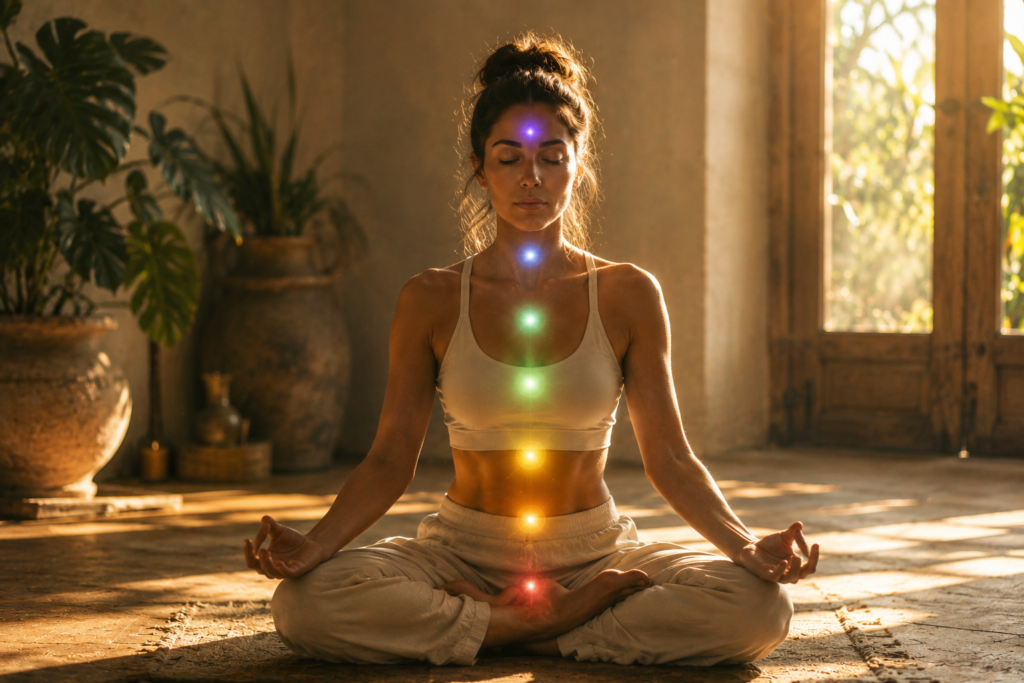
10 Yoga Practices to Calm Your Nervous System
Feeling overwhelmed or emotionally drained? These 10 calming yoga practices will help you soothe your nervous system, release stress and reconnect with your inner balance.

Feeling overwhelmed or emotionally drained? These 10 calming yoga practices will help you soothe your nervous system, release stress and reconnect with your inner balance.

Looking to upgrade your yoga setup? Explore our 2025 guide to the best yoga mats, blocks and accessories. Learn what gear supports your practice and how the right accessories can transform your mind and body.

Want to strengthen both your body and your bond? Explore these 2 Person Yoga Poses designed to build trust, flexibility, and teamwork—all while having fun together.
We make yoga about feeling connected and showing up, not about nailing poses or looking the part.
All levels welcome, judgment left at the door.
No more beautiful words that sound nice but mean nothing.
We explain the 'why' behind ancient practices and give you clear steps to actually live them.
We normalize what you're actually feeling, tension in your hips, racing thoughts, relationship struggles, without toxic positivity or spiritual bypassing.

In this blog, we’ll explore how your mental and emotional state affects your physical health, and how you can use this knowledge to create a more balanced, resilient life.

Just like your body, your brain needs regular exercise to stay sharp and strong. Mental fitness plays a key role in maintaining memory, focus, and problem-solving skills — especially as we age. The good news? You don’t need expensive tools or complex programs to boost brain health. Simple, consistent mental exercises can help keep your mind active and resilient.

Starting a yoga practice can be both exciting and overwhelming, especially with so many poses to choose from. For beginners, focusing on foundational poses helps build strength, flexibility, and balance while establishing a solid practice. Here’s a guide to the five fundamental yoga poses every beginner should master:

In our fast-paced, always-connected world, moments of stillness have become rare — yet more essential than ever. Meditation offers a powerful way to pause, breathe, and reconnect with the present moment. Far from being just a spiritual practice, meditation has been widely studied for its physical and mental health benefits.

Meditation can transform your life — helping you feel calmer, clearer, and more present in each moment. But like any new practice, the hardest part is often consistency. Many people start with good intentions, only to let their routine fade after a few days or weeks.

In today’s fast-paced world, maintaining a healthy and balanced diet can feel like a challenge. But the secret to feeling energized, focused, and strong often lies in choosing nutrient-dense foods – also known as superfoods. These powerhouse ingredients are packed with vitamins, minerals, antioxidants, and other nutrients that help your body thrive.

Yoga and meditation are often spoken of together — and for good reason. Though they are distinct practices, they share the same roots, complement each other beautifully, and both aim to bring harmony between body, mind, and spirit.

Anxiety can feel overwhelming — like a storm of racing thoughts, tightness in the chest, and a constant sense of unease. Whether it’s triggered by stress, uncertainty, or past experiences, anxiety can drain your energy and make everyday life feel heavy.

Life often feels like a race — from one task to the next, one deadline to another. We fill our days with to-do lists, notifications, and endless scrolling, hoping to stay productive and connected. Yet in all this rushing, we often lose touch with what truly matters: presence, peace, and joy.

Everyone experiences negative thoughts from time to time. They might show up as self-doubt, worry, or harsh inner criticism — that quiet voice that says you’re not good enough, that something will go wrong, or that things will never change.

In recent years, remote work has become more than a trend — it’s a fundamental shift in how we live and work. For many, working from home offers flexibility, comfort, and autonomy. No daily commute, more time for family, and the freedom to design your own workspace — what’s not to love?

Living with chronic pain can be challenging — physically, mentally, and emotionally. When pain becomes a daily companion, it can affect every part of life, from sleep and mood to work and relationships. Yet while chronic pain may not always disappear, you can learn to take control, ease its impact, and live a fulfilling, balanced life.