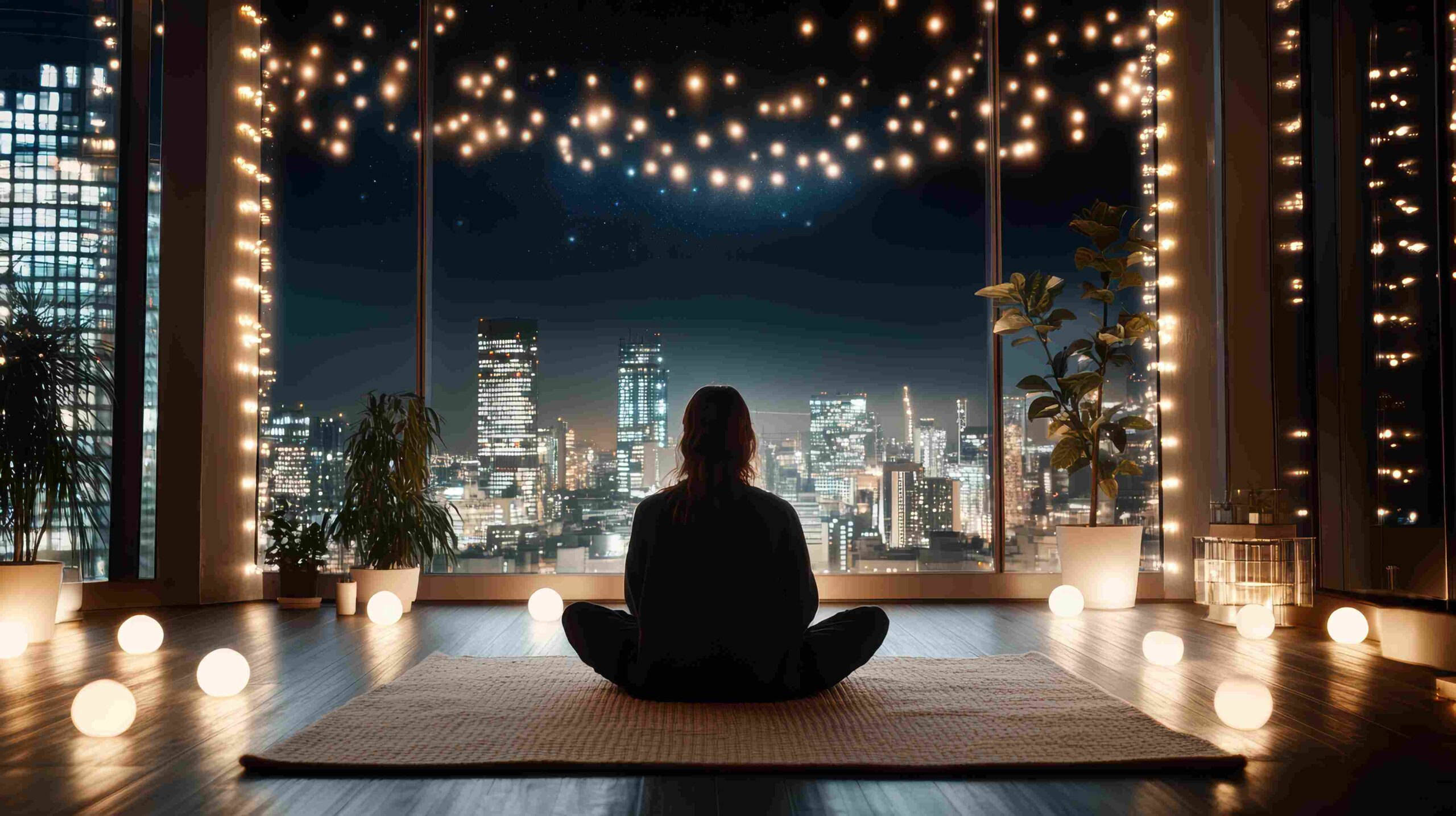
Have you ever found yourself lying in bed, your mind still buzzing with the day’s to-do list, your body restless and tense? That’s exactly when a simple routine of night yoga—yes, gentle evening stretches and mindful movement—can make a real difference. In this article you’ll learn how to use a “night yoga” practice to unwind, relieve stress, enhance flexibility and prepare both body and mind for a restful sleep.
Why Do Night Yoga for Sleep?
The body-mind connection to better rest
Think of your nervous system as a car’s gears: when life’s in “race” mode your body is pumping adrenaline, heart racing, thoughts spinning—and you’re still in a high gear when you get into bed. A targeted night yoga practice shifts you into the “park” or “rest” gear. Research shows that yoga helps people fall asleep more quickly and improves sleep quality. (Harvard Health)
Stress relief through movement and mindful breath
You already know that stress can sabotage sleep. Night yoga supports relaxation by calming your nervous system and easing muscle tension. One study found yoga before bed triggered the parasympathetic “rest and digest” mode. (Intermountain Healthcare)
Flexibility, posture and physical calm
We often hold tension in our hips, back and shoulders—especially if we’ve been seated or stressed all day. A gentle stretch routine boosts flexibility and contributes to a sense of physical comfort, paving the way for better sleep.
How to Set Up Your Calm Bedtime Yoga Practice
Create a soothing environment
- Dim the lights or use warm lighting.
- Clear a small space where you won’t be disturbed.
- Choose loose, comfortable clothing.
- Optionally play soft instrumental music or nature sounds.
Use props if you like
A folded blanket, a bolster, or cushions under your knees can make a big difference—especially as you move into relaxed, restful postures.
Breathe with intention
Inhale gently through your nose. Exhale slowly. You might try a calming breath technique: inhale for 4 counts, hold for 1 count, exhale for 6 counts. This bridges movement and mindfulness and helps you transition into your bed-time flow.
Aim for a short, consistent sequence
Rather than doing a long session one night, a 10–15 minute practice every evening builds habit and momentum. Research shows even brief “bedtime yoga” routines help improve sleep quality. (Medical News Today)
Night Yoga Poses for Relaxation and Sleep Health
Below are gentle, beginner-friendly poses that you can sequence at the end of the day. Feel free to linger in each 30-60 seconds (or longer if time allows).
1. Child’s Pose (Balasana)

- Kneel on the mat or floor with big toes touching; knees can be wide.
- Exhale and sit your hips back toward your heels, forehead resting on the mat or cushion.
- Arms can extend in front or rest alongside your body.
- Breathe deeply and allow the shoulders to soften.
This position signals your body that you’re shifting into rest; it releases tension from the back and hips.
2. Forward Fold / Seated Forward Bend

- Sit with your legs extended or bent comfortably.
- Inhale, lengthen the spine; exhale, fold forward—go only as far as feels easy.
- Hold for a few breaths, then slowly rise.
Forward bends encourage a gentle internal focus and calm.
3. Legs Up-the-Wall (Viparita Karani)

- Sit beside a wall, then lie on your back and swing your legs up the wall.
- Your tailbone may be a few inches from the wall; arms rest by your sides, palms up.
- Stay here for 3–5 minutes, breathing gently.
This restorative pose helps ease leg and foot fatigue, promotes circulation and signals your body it’s time to wind down. (Harvard Health)
4. Reclined Bound Angle (Supta Baddha Konasana)
- Lie on your back. Bend knees, soles of feet together, knees fall outward.
- Place cushions under knees if needed.
- Stretch arms wide or rest them on your belly.
- Breathe into the belly and let your body soften.
This pose opens the hips gently and promotes ease at the end of your day.
5. Supine Twist (Supta Matsyendrasana)
- Lie on your back, draw right knee to chest, then guide it across your body to the left side.
- Extend your right arm out to side, turn your head to the right (if comfortable).
- Hold, then switch sides.
Twists help release the spine, calm nervous system and prepare for rest.
6. Corpse Pose (Savasana) – Final Deep Rest

- Lie on your back, legs extended comfortably, arms by sides, palms up.
- Close your eyes, soften every part of your body.
- Breathe naturally, let your thoughts and tension drift away.
- Stay for 2–5 minutes (or longer if time allows) before smoothly transitioning to sleep.
Closing in Savasana ties together your practice, letting the benefits settle in.
Practical Tips for Better Bedtime Yoga & Sleep Success
- Choose a consistent time each night—ideally 20–30 minutes before you intend to sleep.
- Limit screen time during and after your practice to enhance calm and mindfulness.
- Avoid vigorous, high-energy yoga immediately before bed; focus instead on gentle, slow movements. (Verywell Health)
- Listen to your body: if a pose doesn’t feel comfortable, modify it or skip it. Flexibility is personal.
- Combine the practice with other good sleep habits: cool room, minimal caffeine late in the day, comfortable mattress/pillows.
- Be consistent: small nightly habits build up. One study showed long-term yoga practice reduces sleep disturbances. (PMC)
- If you have specific health conditions (e.g., major insomnia, injuries, chronic illness) check with your healthcare provider before beginning any new practice.
Why This Matters: The Benefits for Mind & Body
Stress and mental calm
Practising night yoga gives you a dedicated nod to yourself—“I’m winding down, I’m giving my body and mind care.” It triggers relaxation responses, lowers stress hormones and can ease anxiety that often keeps us awake.
Improved sleep quality and sleep health
Multiple studies connect gentle yoga routines to fewer sleep interruptions, faster sleep onset and higher sleep efficiency. (Sleep Foundation) It’s not magic, but it is a supportive tool.
Flexibility, mobility and physical ease
Over time, stretching and mindful movement enhance joint mobility, reduce muscle tension and create physical comfort—which in turn supports better rest and fewer nightly disruptions.
Mindfulness and present-moment awareness
Night yoga invites you to slow down, breathe deeply and bring your focus inward. That’s mindfulness in action, and it serves both body and mind as you prepare for sleep.
Connecting to Other Yoga Daily Practices
Looking for more ways to support your wellness journey? Check out our post on the best yoga routines for morning energy, and if your stress levels feel especially high, explore our guide on yoga for stress relief and mindfulness.
Conclusion
In a world where our brains stay switched on long after the working day ends, a mindful night yoga practice gives you a reset—a chance to soften the edges of the day and slide into sleep with grace. By including simple poses, calm breathing and a gentle mind-set, you’re not just stretching your body—you’re nurturing your whole system: body, mind and spirit.
Start tonight: pick two or three of the poses above, do them for 10 minutes, then move into bed with intention. Over time you’ll create a practise that supports your sleep health and overall wellness. Share your experience, adjust what works for you and keep going. Your restful tomorrow begins with the small act of tonight.
FAQ
Q: What time should I do my night yoga practice?
- A:* Aim for 20–30 minutes before your usual bedtime. That gives you space to settle afterwards and allows the calming effects to take hold.
Q: Can I practice night yoga if I’m a complete beginner? - A:* Absolutely. The sequences above are gentle, and you can modify any pose (use cushions, blankets, keep knees bent). The goal is not “perfect form” but comfortable calm.
Q: How long do I need to practise before I see improvements in sleep? - A:* Some people notice changes after just a week of consistent practice. Research shows benefits accumulate over time. (PMC)
Q: Is night yoga enough if I have major insomnia? - A:* Night yoga is a supportive tool—not a replacement for medical advice. If you suffer chronic insomnia or a sleep disorder, it’s wise to consult a healthcare professional alongside your practice.
Q: Can I combine other relaxation techniques (like meditation) with night yoga? - A:* Yes! In fact, combining mindful breathing, gentle yoga and a short meditation can amplify the calming effect and help you transition smoothly into sleep.
Written by Lila Morgan – Yoga Daily
Sources:
- Harvard Health Publishing, “Yoga for better sleep”: https://www.health.harvard.edu/blog/yoga-for-better-sleep-20151204961
- Sleep Foundation, “How Yoga Can Improve Your Sleep Quality”: https://www.sleepfoundation.org/physical-activity/yoga-and-sleep
- Medical News Today, “Yoga before bed: 5-, 10-, and 15-minute routines”: https://www.medicalnewstoday.com/articles/yoga-before-bed
- Intermountain Health, “Try Bedtime Yoga For Less Stress And Better Sleep”: https://intermountainhealthcare.org/blogs/try-bedtime-yoga-for-less-stress-and-better-sleep
- National University of Natural Medicine (Helfgott Research), “Yoga Nidra …”: https://nunm.edu/2021/09/yoga-nidra-helfgott-sharpe/