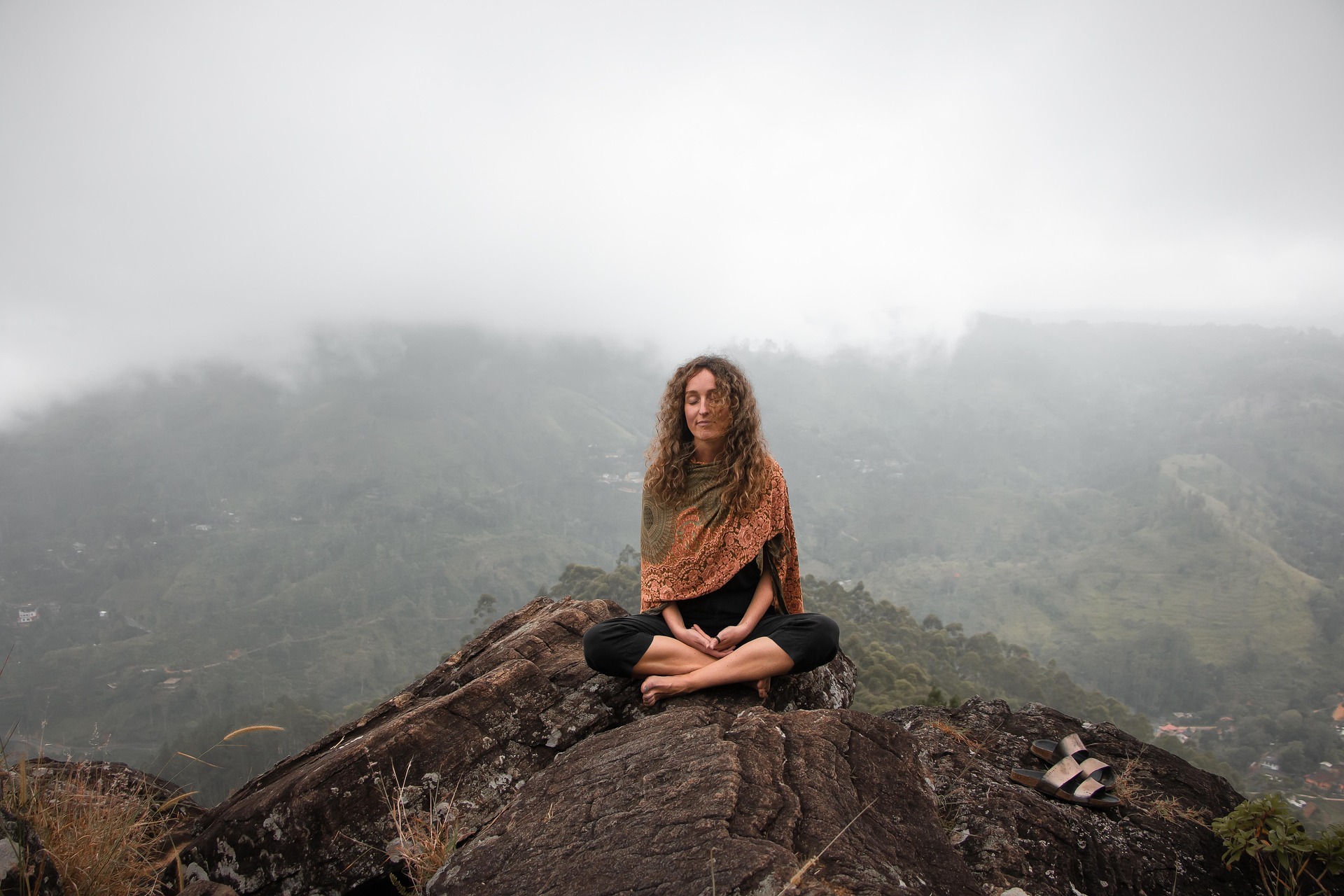
Have you ever felt that yoga is about more than just stretching your body? You’re right. Spiritual yoga is a profound journey inward—one that connects your physical practice to your emotional and spiritual well-being. In this article, you’ll explore how yoga’s deeper side helps you quiet the mind, awaken inner peace, and reconnect with the essence of who you are.
The Essence of Spiritual Yoga
At its heart, yoga is a union—a merging of the body, mind, and soul. The word “yoga” itself comes from the Sanskrit root yuj, meaning to join or to unite. Spiritual yoga invites you to experience this union not just on the mat, but in every aspect of life.
Unlike purely physical fitness routines, yoga philosophy reminds us that true health includes mental and emotional harmony. Through mindfulness, meditation, and intentional breathing, you begin to release inner noise and make space for stillness.

Yoga Philosophy: The Foundation of Spiritual Growth
To understand spiritual yoga, you must first connect with its philosophical roots. The Yoga Sutras of Patanjali, a foundational yogic text, describe an eight-limbed path that guides practitioners toward enlightenment and liberation.
The Eight Limbs of Yoga: A Path to the Soul
Each limb is a stepping stone toward spiritual awareness:
- Yama (Ethical discipline) – Living with integrity, kindness, and truth.
- Niyama (Personal observances) – Cultivating self-discipline and gratitude.
- Asana (Physical postures) – Moving with awareness to prepare the body for meditation.
- Pranayama (Breath control) – Regulating life energy through mindful breathing.
- Pratyahara (Withdrawal of senses) – Turning inward and detaching from external distractions.
- Dharana (Concentration) – Training the mind to focus on one object or thought.
- Dhyana (Meditation) – Entering deep, continuous awareness.
- Samadhi (Union or bliss) – Experiencing oneness with the universe.
Each practice deepens your connection to yourself and the world around you.
Meditation and Mindfulness: The Heart of Spiritual Yoga
If physical postures open the body, meditation opens the soul. By sitting quietly and observing your breath, you enter a state where thoughts lose their grip and presence takes over.
A Simple Meditation Practice for Beginners
- Sit comfortably with your spine tall.
- Close your eyes and relax your shoulders.
- Breathe slowly and naturally through the nose.
- Focus your attention on your breath or repeat a calming mantra like “Om Shanti” (peace).
- Whenever your mind drifts, gently bring it back to your breath.
Even five minutes a day can transform your emotional landscape. Over time, this practice nurtures tranquility, resilience, and clarity—qualities that radiate into every part of life.
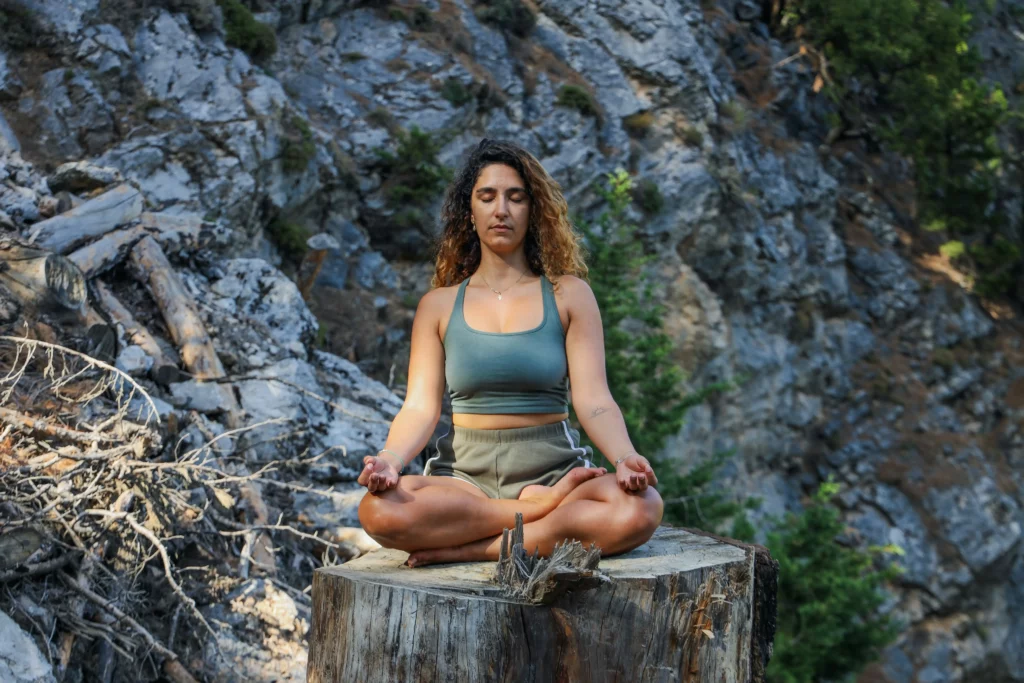
The Physical Practice: Moving Meditation
Asanas (postures) in spiritual yoga are not just about flexibility or strength—they are a form of moving prayer. Each pose becomes a sacred moment of connection between breath and movement.
When practiced mindfully, yoga becomes meditation in motion. Try these grounding poses to deepen your spiritual awareness:
- Mountain Pose (Tadasana): Stand tall, close your eyes, and feel your feet root into the earth.
- Child’s Pose (Balasana): Surrender fully, letting go of tension and expectations.
- Lotus Pose (Padmasana): A classic meditation posture symbolizing inner balance and enlightenment.
Through these simple poses, you’ll discover that peace doesn’t come from doing more—but from being more present.
Cultivating Soul Balance Through Everyday Mindfulness
You don’t need to be in a yoga studio to live spiritually. Everyday mindfulness—how you breathe, eat, walk, or listen—can all be yoga.
Here are ways to integrate spiritual yoga into your daily life:
- Begin each morning in silence. Even a few quiet breaths can set a peaceful tone.
- Practice gratitude before meals. Appreciate the energy that nourishes your body.
- Walk consciously, feeling each step connect with the ground.
- Disconnect from digital distractions and reconnect with your inner world.
These small acts of awareness remind you that spirituality is not something distant—it’s woven into every breath you take.
The Emotional Benefits of Spiritual Yoga
The more you practice spiritual yoga, the more you’ll notice subtle yet powerful shifts:
- Less stress and anxiety: Mindfulness activates your parasympathetic nervous system, calming the body.
- Deeper emotional stability: Meditation increases self-awareness and helps process emotions.
- Enhanced connection: You’ll feel a greater sense of compassion toward yourself and others.
- Lasting peace: With consistent practice, tranquility becomes your natural state.

How Spiritual Yoga Transforms Your Life
When you live with awareness, your outer world starts to mirror your inner calm. You respond instead of reacting, love instead of judging, and move with purpose instead of haste.
Spiritual yoga isn’t about escaping reality—it’s about awakening within it. As you cultivate this inner peace, you’ll begin to notice:
- You smile more often.
- Stress feels less overwhelming.
- Gratitude becomes second nature.
- You sense a quiet joy even in simple moments.
Explore More on Yoga Daily
To deepen your practice, explore our guides in the Yoga Routines category for flows and meditations designed to balance body and mind.For a deeper scientific understanding of mindfulness and its benefits, visit Healthline’s guide on meditation benefits.
The Path to Peace Is Within
At its core, spiritual yoga is about remembering who you are beyond the noise of the world. It teaches you that inner peace isn’t something to find—it’s something to uncover. By aligning your body, breath, and consciousness, you awaken to the wholeness that’s always been inside you.
So roll out your mat, close your eyes, and listen inward. The peace you’re seeking has been waiting for you all along.
Frequently Asked Questions
Q: What makes spiritual yoga different from regular yoga?
A: Spiritual yoga focuses on inner awareness, meditation, and self-realization, while regular yoga often emphasizes physical postures and flexibility.
Q: Can beginners practice spiritual yoga?
A: Absolutely. Spiritual yoga is about intention, not perfection. Start with mindful breathing and simple poses to build awareness gradually.
Q: How often should I practice spiritual yoga?
A: Even 10–15 minutes daily can make a difference. Consistency matters more than duration when it comes to inner transformation.
Q: Do I need to follow a specific religion to practice spiritual yoga?
A: No. Spiritual yoga is universal—it transcends religion and focuses on personal growth, mindfulness, and compassion.
Q: What’s the best time of day for spiritual yoga?
A: Early morning or before bed works best, as those times naturally invite stillness and reflection.
Written by Sofia Patel – Yoga Daily
Sources: