If you’ve ever wondered where to begin your yoga journey, you’re not alone. With thousands of poses out there, it’s easy to feel overwhelmed. But here’s the truth: mastering just a few foundational yoga asanas can completely transform your health, both physically and mentally. These eight essential postures are the pillars of every great practice—they build strength, stability, and inner calm.
Whether you’re stepping onto the mat for the first time or returning after a break, this guide will help you connect movement with mindfulness and rediscover your natural balance.
Why Learning the Basics Matters
Before diving into complex flows or advanced inversions, it’s vital to build a solid foundation. Think of these yoga asanas as the “alphabet” of yoga. Once you understand them, you can create any “sentence” or sequence you desire.
The beauty of yoga lies not in perfection, but in presence. As you practice these poses, you’ll notice how each one teaches patience, awareness, and compassion toward your own body.
1. Mountain Pose (Tadasana)
Tadasana may look simple, but it’s the foundation for nearly every standing posture.
How to practice:
- Stand tall with your feet together and arms by your side.
- Press evenly through your soles, lengthen your spine, and lift through your chest.
- Relax your shoulders and take deep, mindful breaths.
Benefits: Improves posture, strengthens legs, and brings mental focus.

2. Downward-Facing Dog (Adho Mukha Svanasana)
One of the most recognized yoga asanas, Downward Dog stretches and energizes the entire body.
How to practice:
- Begin on hands and knees.
- Lift your hips up and back, straightening your legs and forming an inverted “V.”
- Keep your head relaxed and heels reaching toward the ground.
Benefits: Increases flexibility in hamstrings and shoulders, relieves tension, and boosts blood circulation.

3. Warrior I (Virabhadrasana I)
This powerful pose builds endurance and teaches you how to balance energy and stability.
How to practice:
- Step one foot forward and bend your front knee.
- Keep your back leg straight and grounded.
- Raise your arms overhead and gaze forward.
Benefits: Strengthens legs, opens the hips, and enhances focus.

4. Triangle Pose (Trikonasana)
Triangle Pose connects strength with grace—a perfect expression of balance in yoga.
How to practice:
- Stand with feet wide apart.
- Turn your right foot outward and extend your arms parallel to the floor.
- Reach your right hand toward your ankle while the left hand stretches up.
Benefits: Improves flexibility, tones the legs, and promotes spinal alignment.

5. Tree Pose (Vrikshasana)
Balance, patience, and focus—all cultivated in a single yoga asana.
How to practice:
- Stand tall and place your right foot on your inner left thigh.
- Press palms together in prayer at your chest or extend them overhead.
- Breathe steadily and gaze softly forward.
Benefits: Enhances stability, strengthens core muscles, and improves concentration.

6. Seated Forward Bend (Paschimottanasana)
This pose embodies surrender. It teaches you to slow down and let go.
How to practice:
- Sit with legs extended forward.
- Inhale, lift your arms, then exhale as you fold forward.
- Keep your spine long and reach toward your toes.
Benefits: Stretches the spine and hamstrings, calms the mind, and aids digestion.

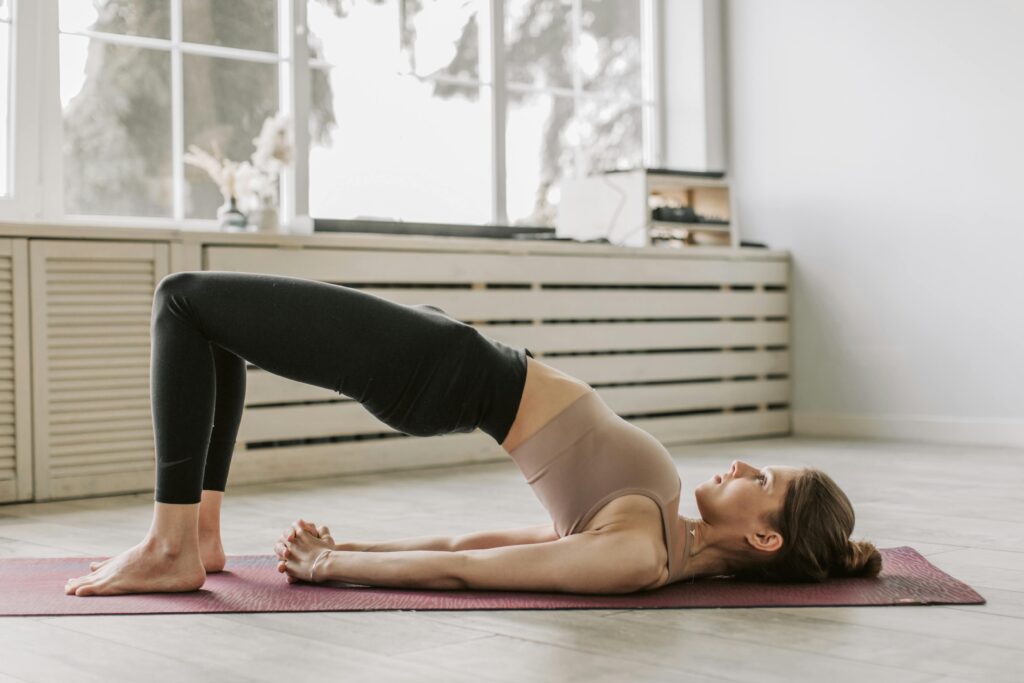
7. Bridge Pose (Setu Bandhasana)
A gentle backbend that strengthens while opening the heart.
How to practice:
- Lie on your back with knees bent and feet hip-width apart.
- Press into your feet to lift your hips.
- Clasp your hands under your back and open your chest.
Benefits: Strengthens the back, improves posture, and reduces stress.
8. Corpse Pose (Savasana)
After movement comes stillness. Savasana is often considered the most important yoga asana—a moment to integrate your practice.
How to practice:
- Lie flat on your back with arms relaxed at your sides.
- Close your eyes and breathe naturally.
- Allow your body to fully release tension.
Benefits: Deep relaxation, stress relief, and improved mindfulness.

The Deeper Connection Between Body and Mind
Yoga isn’t just about flexibility or muscle tone. Every asana teaches awareness. As your body aligns, your breath slows, and your mind quiets, you’ll find a deeper sense of mental calmness.
When you practice these 8 essential yoga asanas regularly, you’re not only shaping your body—you’re reshaping your inner world. You’ll move through life with more energy, focus, and emotional balance.
Tips for Building Your Daily Practice
Starting small is key. Here’s a simple way to build consistency:
- Set aside 20 minutes each morning for your yoga sequence.
- Focus on form, not flexibility. Let your body guide your limits.
- Use props like blocks or straps to support your posture.
- End every session with Savasana—it’s your reset button.
- Journal your progress to track how your energy and mindset evolve.
Remember, yoga isn’t about performing—it’s about transforming.
The Science Behind Yoga’s Health Benefits
Studies show that regular yoga asana practice lowers cortisol levels, improves cardiovascular health, and enhances overall well-being (Harvard Health).
Even just 10–15 minutes daily can regulate your nervous system, boost immunity, and improve sleep quality.
Your Journey Begins Here
Each of these 8 essential yoga asanas represents a step toward a healthier, calmer, and more connected version of yourself. The more you practice, the more your body becomes a mirror of your inner peace.
So roll out your mat, breathe deeply, and start today. You’ll soon discover that yoga’s true gift isn’t flexibility—it’s freedom.
Want to explore more inspiring poses? Visit Yoga Poses & Challenges for detailed guides and sequences designed to deepen your practice.
Frequently Asked Questions
Q: What’s the best time to practice yoga asanas?
A: Morning is ideal, as it helps awaken your body and mind. However, any time that fits your schedule consistently is perfect—consistency matters more than timing.
Q: Can beginners do all these 8 yoga asanas safely?
A: Yes. These poses are beginner-friendly. Focus on alignment, breathe steadily, and use props when needed to support your body.
Q: How long should I hold each asana?
A: Start with 20–30 seconds per pose and gradually increase to one minute as your strength and comfort improve.
Q: Do I need special equipment to start practicing yoga?
A: Not at all. A non-slip mat and comfortable clothing are enough. Optional props like blocks or straps can add support.
Q: How often should I practice to see results?
A: Aim for at least 3–4 sessions per week. Within a month, you’ll notice improved flexibility, balance, and mental calmness.
Written by Elena Brooks – Yoga Daily