25 Yoga Poses Everyone Should Know
Ever feel stiff after sitting all day or stressed from a busy schedule? Yoga can help. In this guide, you’ll discover 25 essential yoga poses (asanas) that everyone – from beginner yoga students to seasoned practitioners – should know. These poses range from energizing postures that build strength to calming poses that cultivate mindfulness. By the end, you’ll have a toolkit of classic yoga moves to improve your flexibility, balance, and posture in daily life. (Yes, even if you can’t touch your toes yet!) The journey starts with a single pose, so let’s roll out your mat and dive in.
Why Learn These Yoga Poses?
Why are these particular yoga poses so important, anyway? For one, they cover a balance of physical and meditative poses – meaning you’ll strengthen your body and soothe your mind. Mastering fundamental poses builds a solid foundation for more advanced practice. Plus, yoga’s benefits go far beyond the mat. Studies confirm yoga can improve flexibility, build strength, and even help relieve stress and anxietyhealthline.com. By practicing proper alignment and breathing in these asanas, you’ll also encourage better posture and mindfulness throughout your day.
Key benefits of practicing yoga poses regularly include:
- Improved flexibility and posture: Gentle stretching and alignment in poses help loosen tight muscles and support posture improvement, counteracting hours of sitting.
- Increased strength and balance: Holding poses builds muscle tone and stability. Over time, you’ll notice better balance (handy for navigating icy sidewalks or crowded buses!).
- Stress relief and mindfulness: Focusing on your breath and body in each pose calms the nervous system. Yoga becomes a moving meditation, reducing tension and anxiety.
- Overall wellness: From boosting circulation to easing back pain, yoga supports your body’s systems. It’s a holistic practice that nurtures both physical health and mental well-being.
Ready to get started? Below, we’ve grouped 25 classic yoga poses everyone should know into categories. You’ll learn a bit about how to do each pose, what it’s good for, and some handy tips. Feel free to try them out at your own pace – yoga is about progress, not perfection!

Standing Poses for Balance and Posture Improvement
Standing poses are the foundation of any yoga practice. These classic standing asanas help you build balance, strength, and proper alignment from the ground up. They’re great for improving your posture and confidence. Don’t be fooled by how simple they look – standing poses can be surprisingly powerful!
1. Mountain Pose (Tadasana)
Mountain Pose may look like just standing, but it’s the blueprint for all other poses. Stand tall with your feet hip-width apart or together, arms relaxed at your sides. Press evenly through your feet and lengthen up through the crown of your head. Benefit: Improves posture and body awareness. This pose helps you find your center of balance and a sense of grounding. (Tip: Engage your thighs and draw in your belly slightly – you’ll feel how active “standing” can be!)
2. Chair Pose (Utkatasana)
From Mountain Pose, inhale and raise your arms, then exhale and sit your hips back as if lowering into an invisible chair. Knees stay behind toes, weight in your heels. Benefit: Strengthens your legs, glutes, and core while also heating up the body. Chair Pose is a classic beginner yoga strength-builder that challenges your endurance. Feel your thighs burn? That’s normal – it builds stamina and focus. (Imagine sitting back into a real chair to get the alignment right.)
3. Warrior I (Virabhadrasana I)
Step one foot forward into a lunge and pivot your back foot flat at ~45 degrees. Bend your front knee over the ankle and reach your arms overhead. Square your hips and chest toward the front. Benefit: Stretches the hips and strengthens the legs and shoulders. Warrior I is a classic yoga posture for cultivating power and stability. It also opens the chest, encouraging a confident, uplifted stance. You’ll feel both grounded and energized in this pose.
4. Warrior II (Virabhadrasana II)
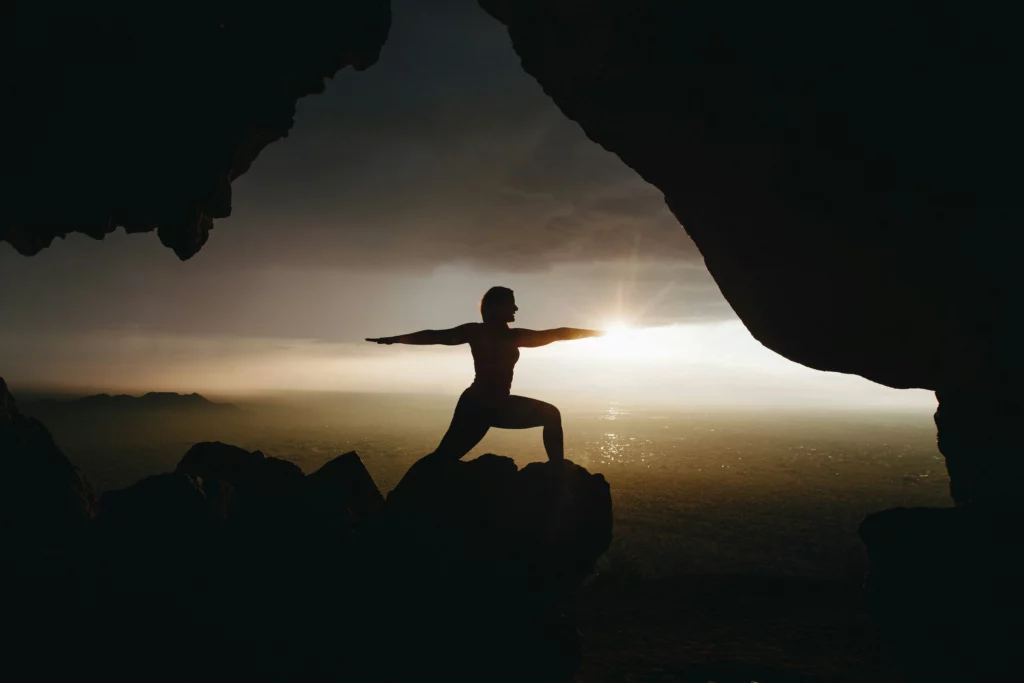
From a standing lunge with one foot forward and the other back (feet about a leg’s length apart), turn your back foot out 90 degrees. Open your hips to the side. Extend your arms out to shoulder height, one in front and one behind, gazing over your front hand. Benefit: Strengthens the legs, opens the hips, and improves focus. This pose also promotes balance and stability as you hold a strong, expansive stance. Warrior II can make you feel like a confident warrior – calm and steady. (Keep that front knee directly above the ankle to protect it.)
5. Triangle Pose (Trikonasana)
From a wide standing stance, point your front foot forward and back foot slightly in. Extend your arms out at shoulder height. Reach forward with your front arm, then tilt at the hip to bring your front hand down to your shin, ankle, or the floor (or a block) – whichever you can reach comfortably – and lift your other arm toward the sky. Gaze up if possible. Benefit: Stretches the hamstrings, groins, and side body while strengthening the legs. Triangle improves spinal mobility and balance. It’s great as a flexibility guide for the entire body – you’ll feel a deep stretch along your side and inner thigh. (Don’t worry if you can’t touch the floor at first – rest your hand on your shin or a yoga block.)
6. Extended Side Angle Pose (Utthita Parsvakonasana)
Starting in Warrior II stance, lower your front forearm to your front thigh (or place your hand to the floor inside your foot) and stretch your opposite arm over your ear, palm facing down. Your body forms a diagonal line from back heel to fingertips. Benefit: Opens the hips and side of the body, while strengthening the legs and core. Extended Side Angle provides a deep stretch along your torso and helps develop stamina. It can also aid in posture improvement by opening tight shoulders and strengthening your side body. (Press firmly through the outer edge of your back foot to stay balanced.)
7. Tree Pose (Vrksasana)
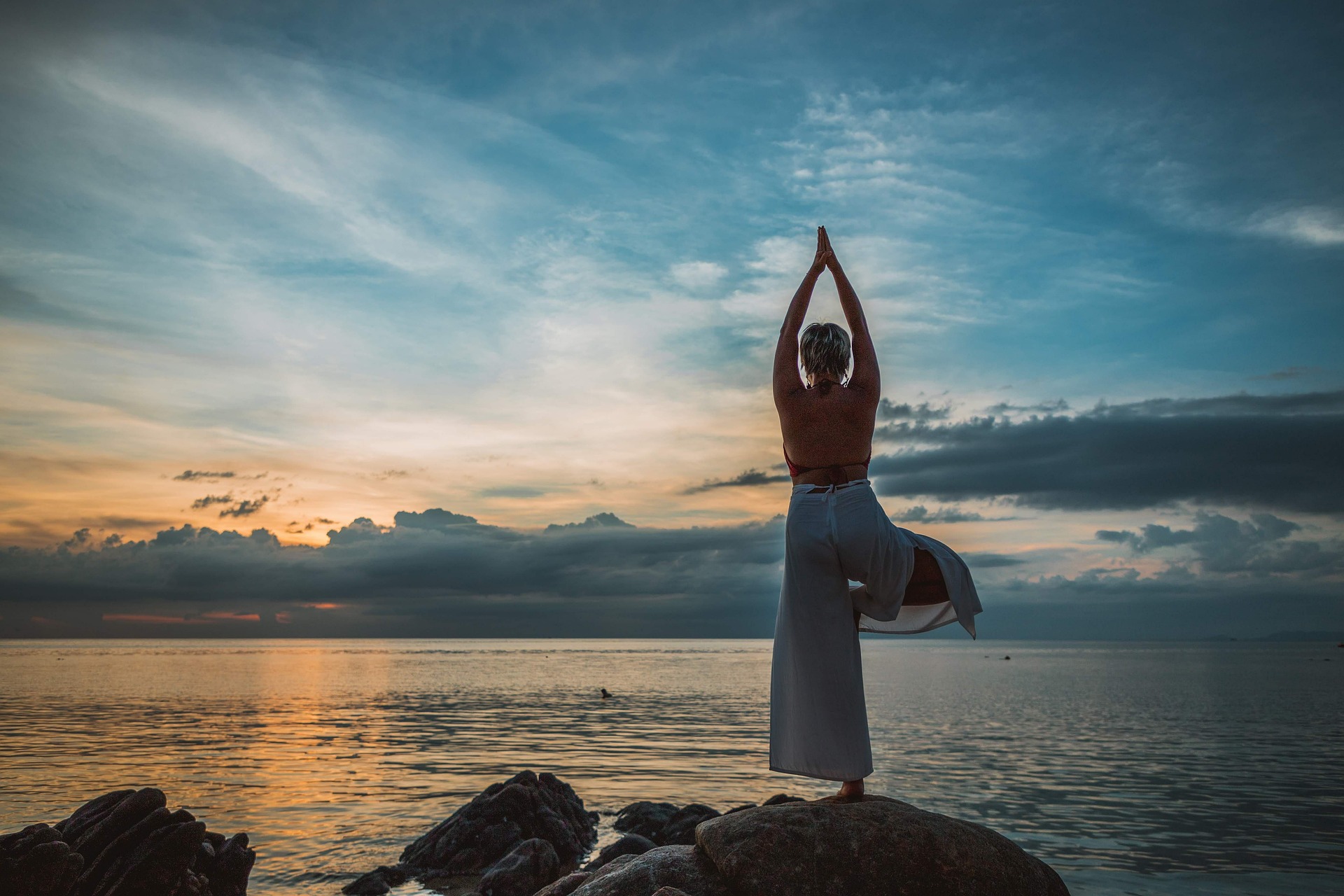
Stand tall and shift your weight onto one foot. Bring the sole of your other foot to rest on your standing leg – either on the calf or inner thigh (avoid the knee joint). Bring your hands to prayer at your chest or raise them overhead like branches. Find a focal point to gaze at. Benefit: Improves balance, concentration, and leg strength. Tree Pose is a fun challenge that teaches you to stay calm and focused even when you’re a bit wobbly. It also strengthens the ankles and core. (Feel free to lightly touch a wall for support if you’re losing balance – with practice, you’ll become as steady as a tree.)

Flowing Poses for Warm-Up and Strength
Flowing poses help you connect movement with breath, making them perfect for warm-ups and building strength. Many of these poses link together in common sequences like the Sun Salutation. They’ll stretch and energize your whole body. Think of this section as a mini flexibility guide – warming up muscles and increasing blood flow – while also toning your core and upper body.
8. Cat-Cow Pose (Marjaryasana/Bitilasana)
Cat-Cow is actually a gentle flow between two poses that warms up the spine. Start on hands and knees (tabletop position). Inhale into Cow Pose: drop your belly, lift your tailbone and gaze up, letting your back arch. Then exhale into Cat Pose: round your spine toward the ceiling, tucking your chin and tailbone (like a stretching cat). Continue flowing with your breath. Benefit: Increases spinal flexibility and relieves tension in the back. It also encourages mindful breathing and is a great beginner yoga warm-up. After a few rounds, you’ll notice your back feels looser and your mind more focused.
9. Standing Forward Bend (Uttanasana)
From Mountain Pose, exhale and hinge at your hips to fold forward. Let your head and arms hang toward the floor. Knees can stay slightly bent if needed, especially if your hamstrings are tight. Hold opposite elbows or touch the ground if you can. Benefit: Stretches the hamstrings, calves, and lower back, and gently calms the nervous system. Forward Bend is a soothing pose that encourages introspection and release – you literally “let go” toward the earth. (If you can’t touch your toes, no worries – bend your knees or use a yoga strap around your feet. Over time, Uttanasana will lengthen those muscles.)
10. Downward-Facing Dog (Adho Mukha Svanasana)
From hands and knees, walk your hands forward and spread your fingers wide. Tuck your toes under and lift your hips up and back, straightening your legs as able to form an inverted “V” shape with your body. Press your hands firmly into the mat and lengthen your spine, drawing your chest toward your thighs. Benefit: Stretches the entire back side of your body – shoulders, spine, hamstrings, calves – while building arm and shoulder strength. Downward Dog also gently inverses the body, bringing blood flow to the brain and relieving fatigue. It’s often a resting pose in active yoga classes, providing a moment to reset and breathe. (It’s okay if your heels don’t touch the ground – focus on a long spine over straight legs.)
11. Plank Pose (Phalakasana)
From Downward Dog, shift your body forward until your shoulders stack over your wrists, bringing your body into a straight line like the top of a push-up. Feet are hip-width apart, heels pressing back. Engage your core, avoid sagging or piking the hips. Benefit: Strengthens the arms, shoulders, core, and legs – truly a full-body toner. Plank builds endurance and focus. It might make you shake when you hold it, but that’s your muscles getting stronger! This pose is fantastic for core stability which supports better posture. (Need a modification? Lower your knees to the mat while keeping a straight line from knees to head.)
12. Cobra Pose (Bhujangasana)
Lie on your belly with hands under your shoulders. Hug your elbows to your sides. Inhale and gently lift your chest by pressing into your palms, keeping your lower ribs on the mat. Draw your shoulders back and keep your neck long (don’t crank your head up too high). Benefit: Stretches the front of the body (chest and abdomen) and strengthens the back muscles. Cobra is a mild backbend that counteracts slouching and can improve spinal flexibility. Emotionally, open-heart poses like Cobra can be energizing and uplifting. (Only lift as high as comfortable – even a small lift engages your back. Avoid straightening your arms completely if it strains your lower back.)
13. Upward-Facing Dog (Urdhva Mukha Svanasana)
This pose is similar to Cobra but a bit more intense. From lying on your stomach, place your palms under shoulders and press up, straightening your arms and lifting your torso and thighs off the mat. Only the tops of your feet and your palms touch the ground. Open through the chest and keep your shoulders down away from ears. Benefit: A deeper backbend that increases upper-body strength and spinal flexibility. Upward Dog opens the chest and shoulders, improving posture, and strengthens the wrists, arms, and spine. It’s often part of a vinyasa flow (linked with Plank and Down Dog) to build heat and power in the body.
14. Sphinx Pose (Salamba Bhujangasana)
For a gentler backbend, try Sphinx Pose. Lie on your belly and prop yourself up on your forearms, elbows under shoulders. Press your forearms down and lift your chest, keeping your lower belly on the floor. Draw shoulders back and gaze forward softly. Benefit: Gently opens the chest and strengthens the upper back without too much pressure. Sphinx is perfect if Cobra or Up Dog feel too deep; it helps beginners prepare for deeper backbends. This pose encourages length in the spine and can relieve tightness in your lower back. It’s also subtly calming, making it a nice pose to linger in while breathing deeply.
15. Bridge Pose (Setu Bandha Sarvangasana)
Lie on your back with knees bent and feet flat on the floor, hip-width apart. Arms rest alongside your body. Press into your feet to lift your hips and lower back off the mat. You can clasp your hands under your back, pressing arms down for support, or just keep palms flat. Keep your gaze upward (avoid turning your head). Benefit: Strengthens the glutes, back, and hamstrings, and opens the chest and hip flexors. Bridge counteracts long days of sitting by stretching the spine and front body while engaging the posterior chain (backside of body). It can invigorate you and improve spinal mobility. (You can place a yoga block under your lower back for a supported Bridge – a gentle restorative variation to relax with.)
16. Boat Pose (Navasana)
Sit on the floor with knees bent and feet on the ground. Place your hands behind your thighs and lean back slightly, keeping your spine long. Lift your feet off the floor so that your shins are parallel to the ground (like the top of a tabletop). Balance on your sitting bones. When stable, you can extend your arms forward alongside your legs. For a fuller expression, straighten your legs (forming a “V” shape with your body). Benefit: Strengthens the core (abs and hip flexors) and improves balance. Boat Pose helps build a strong center, which is crucial for overall stability and posture. It also challenges your mental focus and resilience – you’ll learn to breathe through the “shake” as your core works hard! (If straightening legs is too much, keep them bent or hold the backs of your thighs for support. Consistency will build your core strength.)
Seated and Twisting Poses for Flexibility and Mindfulness
Seated poses and gentle twists help you wind down and stretch deeper with control. These asanas improve flexibility in the spine and hips, and many have a calming, introspective quality. Twists are also known for stimulating digestion and releasing tension in the back. Practice these with a mindful, slow approach – they’re as much about mental centering as physical flexibility.
17. Easy Pose (Sukhasana)
This is the classic cross-legged sitting pose many people associate with meditation. Sit on the floor (or on a folded blanket for comfort) with legs crossed comfortably, feet under your knees. Sit up tall, aligning head, neck, and spine. Rest your hands on your knees or in your lap. Benefit: Promotes mindfulness, focus, and gentle hip opening. Easy Pose is often used for breathwork and meditation, helping you develop a straight yet relaxed posture. It encourages mindfulness and a sense of grounding. (If your hips are tight, sit on a cushion or block to elevate your hips above your knees – it will feel much more comfortable.)
18. Seated Forward Bend (Paschimottanasana)
Sit with your legs extended straight in front of you. Inhale and lengthen upward, then exhale and hinge at the hips to fold forward over your legs. You can reach for your toes, ankles, or shins – or use a strap around your feet if needed. Keep your spine long rather than rounding excessively; it’s okay if you don’t go very far. Benefit: Stretches the entire back of your body, especially hamstrings and lower back. This pose also calms the mind and is often used at the end of practice to encourage relaxation and introspection. It can feel like a modest, grounding bow inward. (Don’t force the stretch; a mild pulling sensation in the hamstrings is fine, but sharp pain is not. Bend your knees slightly if that’s more comfortable while you gradually increase flexibility.)
19. Half Lord of the Fishes Pose (Ardha Matsyendrasana)
Sit with legs extended, then bend your right knee and place your right foot flat on the floor outside your left thigh. Bend your left leg and tuck the left foot near your right hip (or keep the left leg straight if that’s more comfortable). Inhale and sit tall. Exhale, twist to the right, placing your right hand on the floor behind you for support and your left elbow against the outside of your right knee to gently deepen the twist. Gaze over your right shoulder. Benefit: Increases spinal mobility and helps detoxify the internal organs through gentle compression. Twisting poses like this can aid digestion and relieve tension in the back. Mentally, they teach you to breathe and stay mindful even as you wring out stress. Remember to do both sides! (Keep your spine lengthened upward as you twist, and never force the rotation – use each exhale to ease into it.)
20. Butterfly Pose (Baddha Konasana)
Sit tall and bring the soles of your feet together, allowing your knees to fall out to the sides (like a butterfly’s wings). Hold your feet or ankles. You can keep the feet a bit forward to form a diamond shape with your legs if that’s more comfortable. Gently lean forward from the hips if you want a deeper stretch, keeping your back relatively straight. Benefit: Opens the hips and groin, stretching the inner thighs. This pose improves flexibility in the hip joints and can help release lower back tension. It’s also calming – many people find a gentle forward fold in Butterfly to be relaxing. (If your knees are very high off the ground, sit on a cushion or place blocks under your knees for support. Over time, your hips will open and knees will lower closer to the floor.)
Restorative Poses for Relaxation and Stress Relief
After working your body, it’s important to cool down and relax. Restorative poses are all about letting go and allowing your body to recharge. These poses often use gravity to gently stretch you, and they encourage a state of deep relaxation and mindfulness. They’re perfect for stress relief and recovery – try them anytime you need to unwind.
21. Child’s Pose (Balasana)
Begin on your hands and knees, then sit your hips back onto your heels and lower your chest toward the mat. You can keep your knees together or spread them apart for more ease. Stretch your arms forward or let them rest by your sides, and rest your forehead on the mat (or on your hands). Benefit: Gently stretches the lower back, hips, knees, and ankles while calming the mind. Child’s Pose is a restful posture that encourages you to turn inward and breathe. It’s often used as a mindful break during practice to recover. Emotionally, it creates a sense of surrender and comfort – like a little safe haven on your mat. (If your head doesn’t comfortably reach the floor, place a yoga block or pillow under your forehead. You can also put a folded blanket between your thighs and calves for added support.)
22. Happy Baby Pose (Ananda Balasana)
Lie on your back and draw your knees toward your chest. Grab the outside of your feet (or behind your thighs if you can’t reach your feet). Open your knees wider than your torso and gently pull them toward your armpits, so your ankles are stacked over your knees, soles of the feet facing upward. You can rock side to side if it feels good. Benefit: Releases the lower back and opens the hips. Happy Baby gently stretches the inner thighs and can ease tension after a long day of sitting or standing. It also encourages playfulness and stress relief – it’s named “Happy Baby” because babies naturally do this pose! It’s hard not to feel a little more relaxed and cheerful afterward.
23. Reclining Bound Angle Pose (Supta Baddha Konasana)
Lie flat on your back and bring the soles of your feet together, similar to Butterfly Pose but you’re lying down. Let your knees fall open to the sides. You can place pillows or folded blankets under each knee for support if needed. Rest your hands on your belly or out to the sides. Benefit: Gently opens the groin and hips while promoting deep relaxation. This restorative pose helps release tension in the hips and can soothe the nervous system. Many people use Reclining Bound Angle to relax at the end of a practice or even before sleep – it’s a great hip opener that also encourages a meditative state. (Close your eyes and focus on slow breathing here; allow gravity to do the work of opening your hips, no effort required.)
24. Legs-Up-the-Wall Pose (Viparita Karani)
Sit with one side of your body against a wall, then gently swing your legs up onto the wall as you lower your back to the floor. Scoot your hips snugly against the wall if comfortable, or a few inches away if a deeper stretch is too intense. Let your arms rest at your sides, palms up. This pose is essentially lying on your back with legs vertically up the wall. Benefit: Encourages circulation from the legs back toward the heart, reduces swelling in the feet/legs, and deeply calms the mind. Legs-Up-the-Wall is a wonderful pose for stress relief and recovery – it’s often called an “instant relaxation” pose. Stay here for several minutes to fully enjoy its soothing effects. (This pose can especially feel amazing after standing or traveling all day – it’s like a gentle reset for tired legs and a frazzled mind.)
25. Corpse Pose (Savasana)
Lie flat on your back with legs comfortably apart and arms resting at your sides, palms facing up. Let your feet drop outward naturally. Close your eyes and consciously relax every part of your body from head to toe. Benefit: Deep relaxation and integration of your practice. Savasana is often the final pose of a yoga session, allowing your body to absorb the benefits of all the preceding poses. It calms the brain, helps relieve stress, and can lower blood pressure. While it looks like “just lying there,” maintaining awareness in relaxation is a form of mindfulness meditation. This pose can be surprisingly challenging for active minds, but it’s profoundly rejuvenating. (If your lower back feels uncomfortable, place a rolled blanket under your knees. Stay for at least a few minutes – or longer if you have time – breathing softly and surrendering to stillness.)

Embrace Your Yoga Journey
These 25 yoga poses cover a wide range of movements – standing strong, balancing, bending, twisting, and resting – giving you a well-rounded foundation in yoga. By practicing these classic yoga asanas, you’ll build strength and flexibility in your body while cultivating peace of mind. Remember, yoga is not about achieving a perfect pose or comparing yourself to others. It’s about connecting with your own body and breath. Even a few minutes of practice can make a difference in how you feel.
So roll out your mat and give these poses a try! You might start by picking a few poses to practice each day, or combine several into a simple routine. (Why not try a short sequence like Sun Salutation incorporating Mountain, Forward Bend, Plank, Cobra, and Down Dog?) Over time, you’ll likely notice positive changes – perhaps touching your toes for the first time, feeling less stressed, or standing a little taller with better posture. Most importantly, you’ll discover that yoga is a journey of self-care and awareness.
As you continue, listen to your body and celebrate your progress. For further guidance, you can explore our yoga for better posture tips or follow a yoga flexibility guide to deepen your practice safely. Yoga is a lifelong learning process – there’s always something new to explore, whether it’s a more advanced pose or a deeper sense of inner calm. Enjoy the journey, and remember that every yoga pose you learn is another tool to help you live a healthier, more mindful life both on and off the mat.
Frequently Asked Questions
Q: I’m new to yoga – can I do all these poses?
A: Absolutely. These poses are considered foundational and many are beginner-friendly. It’s normal if some feel challenging at first, but you can modify them. For example, bend your knees in forward bends or use a wall for balance in standing poses. Over time, your strength and flexibility will increase. Remember, yoga is non-competitive – it’s perfectly fine to go at your own pace and use props or modifications as needed.
Q: What if I’m not very flexible?
A: No problem! You don’t have to be bendy to start yoga; gaining flexibility is a benefit of practicing these poses. If you’re tight, use props like yoga blocks, straps, or cushions to support you. Can’t touch your toes? Try placing a strap around your feet in Seated Forward Bend, or rest your hands on your shins instead of the floor in Triangle Pose. With consistent practice, you’ll gradually loosen up. The key is to breathe and not force it – flexibility will come with time.
Q: How long should I hold each pose?
A: It varies by pose and your comfort level. As a general guideline, aim for about 3–5 breaths per pose to start. In more active poses (like Warrior II or Plank), this might be 20–30 seconds. In relaxing poses (like Child’s Pose or Legs-Up-the-Wall), you can stay longer – even a few minutes – if it feels good. Always come out of a pose if you feel pain or sharp discomfort. With experience, you’ll learn to listen to your body’s signals on how long to stay.
Q: Do I need any special equipment or props for these yoga poses?
A: All you really need is a yoga mat or a non-slip surface. However, props can be very helpful, especially for beginners. Yoga blocks, straps (or even a belt/towel), and blankets are great for providing support and making poses more accessible. For instance, a block under your hand in Half Lord of the Fishes can help if the twist is too deep, or a folded blanket under your hips in Easy Pose can make sitting more comfortable. If you don’t have official yoga props, you can get creative with sturdy books (as blocks) or a scarf (as a strap).
Q: How often should I practice these poses to see results?
A: Consistency is key. Even practicing 2–3 times a week can yield noticeable benefits in a few weeks. You might start with 10-15 minutes a day and gradually increase the duration. The more regularly you practice (within reason), the more you’ll improve flexibility, strength, and mental calm. Daily practice, even if it’s just a short session, can be wonderful – but listen to your body. It’s better to do a little bit of yoga often than a long session only once in a while. Remember to include some rest days or gentle days, especially if you feel sore. Over time, yoga can become a healthy habit that you look forward to as a way to energize your mornings or unwind in the evenings.
Written by Lila Morgan – Yoga Daily