Aerial Yoga looks mesmerizing—the silks floating, the effortless inversions, the graceful poses. But as beautiful as it is, practicing safely is everything. Whether you’re joining your first class or setting up your hammock at home, understanding the right precautions can make the difference between an empowering session and an injury risk.
In this guide, we’ll explore essential Aerial Yoga safety tips for beginners, helping you develop strength, flexibility, and trust in your body. You’ll learn how to stay grounded—literally and mentally—even when you’re upside down.
What Is Aerial Yoga?
Aerial Yoga (also known as Anti-Gravity Yoga) combines traditional yoga poses, aerial fitness, and acrobatics using a suspended silk hammock. The support of the fabric allows you to experience inversions, deep stretches, and unique poses that might be difficult on the mat.
Think of it as a blend of strength yoga, flexibility exercises, and balance training—all wrapped in a playful experience that challenges both your body and your focus.
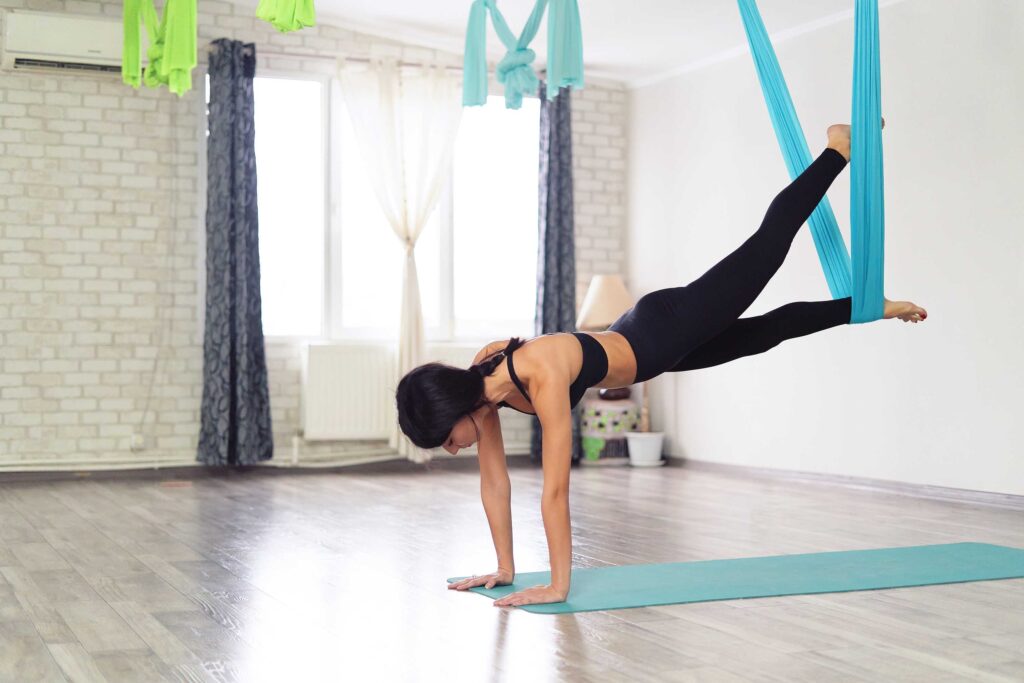
Why Safety Matters in Aerial Yoga
Hanging several feet above the ground adds excitement—but also responsibility. Beginners often underestimate how much posture safety and awareness affect their practice. Just one wrong grip or misaligned core can cause strain or discomfort.
But don’t worry—with mindfulness and preparation, you can enjoy every session safely. Here’s how.
1. Choose the Right Equipment
Your hammock is your safety net—literally.
What to look for:
- Quality fabric: Use strong, stretch-resistant material specifically designed for Aerial Yoga.
- Professional installation: Never hang your hammock from a random ceiling hook. Always install into a load-bearing beam or use certified rigging.
- Regular inspections: Check for fraying, loose carabiners, and weak points before every session.
If you’re practicing at home, ask a certified rigger or yoga professional for guidance. A safe setup gives you confidence to explore.
2. Start with a Certified Instructor
A good aerial fitness teacher can make all the difference. They’ll guide you through correct alignment, breathing, and how to enter or exit poses safely.
Even if you plan to practice solo later, take at least a few beginner classes first. You’ll learn how to handle the silks, manage your balance, and prevent over-stretching—especially during yoga inversions.
Internal link suggestion: Read our beginner’s guide to safe inversions in /headstand-yoga-for-beginners/.
3. Warm Up and Build Core Strength
Aerial Yoga requires strong stabilizers, particularly in your core, shoulders, and legs. Jumping right into advanced poses without preparation can strain muscles or joints.
Here’s a simple pre-aerial warm-up:
- Cat-Cow Stretch – Loosen the spine.
- Plank Pose – Engage your abs and shoulders.
- Downward Dog – Stretch your hamstrings and calves.
- Bridge Pose – Strengthen glutes and back.
- Arm Circles – Prepare your shoulder joints.
Aim to spend 5–10 minutes warming up before you even touch the hammock.

4. Listen to Your Body
Your body speaks; your job is to listen.
Feeling slight discomfort during a stretch? That’s normal. Feeling sharp pain or dizziness while inverted? That’s your cue to stop immediately.
Remember: Aerial Yoga isn’t about pushing limits—it’s about exploring freedom through awareness. Breathe deeply, move slowly, and stay connected to your sensations.
If you have conditions like high blood pressure, glaucoma, or recent injuries, talk to a healthcare provider before trying inversions. The Cleveland Clinic offers helpful guidance on when inversions might not be suitable: https://health.clevelandclinic.org.
5. Practice Mindful Inversions
Inversions are the highlight of Aerial Yoga—swinging upside down feels liberating! But without proper support, they can strain the neck or spine.
Beginner inversion safety checklist:
- Always double-check your hammock height (hip level is ideal).
- Keep your chin slightly tucked to avoid neck compression.
- Engage your core before lifting legs.
- Exit poses slowly, one leg at a time.
You’ll build confidence gradually, and soon, inversions will feel like second nature.
6. Dress Smart for the Silks
Your outfit can affect how smoothly you move in the hammock. Avoid slippery fabrics, zippers, or jewelry that might snag.
Best Aerial Yoga clothing tips:
- Wear snug, stretchable clothing that covers underarms and knees.
- Avoid loose shirts that slide when inverted.
- Tie back long hair.
Check out our style guide for inspiration: Chic and Comfy: Yoga Outfits for Every Season.
7. Focus on Alignment and Breath
When suspended in the air, balance becomes both physical and mental. Alignment helps distribute your weight evenly, preventing unnecessary tension.
Try this alignment cue: imagine a line running from your crown to your tailbone, keeping your spine long and open. Combine this awareness with slow, rhythmic breathing—it helps maintain control, especially in transitions between poses.

8. End Every Session with Grounding
After all that flying, come back to Earth—literally.
Finish with Savasana (corpse pose) on your mat. It re-centers your nervous system and integrates the benefits of your aerial practice. Use this quiet moment to notice how your body feels—stronger, more open, and lighter.
9. Stay Consistent but Patient
You won’t master Aerial Yoga overnight. The silks challenge muscles you may not even know existed. Some days you’ll flow effortlessly; others, you’ll wobble. That’s part of the journey.
Celebrate small wins—holding a pose a few seconds longer, breathing calmly through transitions, or simply showing up for class. Over time, your flexibility and confidence will expand naturally.
For more guidance and routines, visit our Aerial Yoga category here: https://yogadaily.com/category/aerial-acro-power-yoga/.
10. The Mental Benefits of Aerial Yoga
It’s not just your body that’s lifted—your spirit rises too.
Suspending yourself in mid-air builds trust, focus, and mindfulness. It’s a moving meditation that teaches surrender while cultivating courage. When you let go—both physically and emotionally—you discover how freeing balance can be.
Regular practice can reduce stress, improve body awareness, and elevate your mood. Aerial Yoga becomes a metaphor for life itself: when you release control, you find support in unexpected places.
Fly Smart, Flow Safe
Aerial Yoga is a joyful, transformative practice—but safety always comes first. When you combine mindful awareness with proper technique, you unlock not just physical strength, but mental serenity.
So next time you step into your hammock, remember: you’re not just hanging—you’re growing, breathing, and evolving in every direction.
Frequently Asked Questions
Q: Is Aerial Yoga safe for complete beginners?
A: Yes, when guided by a certified instructor and using proper equipment. Beginners should start with foundational poses before attempting inversions.
Q: How high should my aerial hammock be?
A: Ideally, the hammock should hang at your hip height when you stand. This allows safe entry, exit, and pose transitions without excessive strain.
Q: Can I practice Aerial Yoga at home?
A: You can, but it’s crucial to have professional installation and guidance. Always use high-quality gear and check your rigging regularly.
Q: What muscles does Aerial Yoga work?
A: It targets the core, shoulders, arms, and legs while improving flexibility, balance, and joint stability.
Q: How often should I practice?
A: Two to three times per week is ideal for beginners. As your strength and coordination improve, you can increase frequency gradually.
Written by Harper Lee – Yoga Daily