Starting your yoga journey can be both exciting and intimidating. Maybe you’ve seen those graceful poses online and thought, “I could never do that.” But here’s the truth — yoga isn’t about perfection; it’s about progression. In this guide, we’ll explore a simple beginner yoga flow designed to help yoga principiantes (beginners) build confidence, improve body awareness, and nurture inner calm.
Whether you’re seeking more flexibility, strength, or mental peace, this flow will help you take your first steps with courage and curiosity.
Understanding Yoga for Beginners: Confidence Starts Within
Confidence in yoga doesn’t come from mastering the hardest poses — it comes from showing up on the mat. Every time you breathe through a stretch or find balance in a simple pose, you’re strengthening both body and mind.
Yoga principiantes often struggle not with flexibility, but with self-belief. You might compare yourself to others or worry you’re not “doing it right.” The truth is, yoga is about awareness, not achievement. It’s about learning to listen to your body’s whispers before they become shouts.
Benefits of a Beginner Yoga Flow
Starting with a gentle, structured yoga flow offers countless benefits. Beyond the physical stretches, it rewires your mindset. Here’s what you’ll gain when practicing regularly:
- Enhanced body awareness – Learn how your body moves and feels in each posture.
- Improved flexibility and balance – Gradually increase mobility without strain.
- Mental calmness – Breathing techniques help ease anxiety and bring focus.
- Boosted motivation and self-confidence – Each small win builds inner strength.
- Mind–body connection – You’ll begin to move with mindfulness, not just motion.
(To explore gentle sequences for all levels, visit Yoga for Beginners & Seniors).
Step-by-Step: The Simple Beginner Yoga Flow
Let’s go through a gentle sequence you can follow right at home. All you need is a yoga mat, a calm space, and an open mind.
1. Mountain Pose (Tadasana)
Stand tall with feet hip-width apart. Ground through your feet, engage your core, and roll your shoulders back. Breathe deeply and lift your chest.
Why it helps: This foundational posture improves posture awareness and creates a sense of grounding — a perfect start for yoga principiantes.
2. Cat-Cow Stretch (Marjaryasana–Bitilasana)
Move onto hands and knees. Inhale to arch your back (Cow Pose), exhale to round your spine (Cat Pose). Continue for 5–8 breaths.
Why it helps: It releases tension from the spine and encourages mindful breathing.
3. Downward-Facing Dog (Adho Mukha Svanasana)
From all fours, tuck your toes and lift your hips toward the sky. Spread your fingers and press evenly through your hands.
Tip for yoga principiantes: Bend your knees if your hamstrings feel tight — alignment is more important than perfection.
4. Warrior II (Virabhadrasana II)
Step your right foot forward, open your hips to the side, and stretch your arms parallel to the floor. Gaze softly over your front hand.
Why it helps: This pose builds strength, stability, and presence — all pillars of confidence.

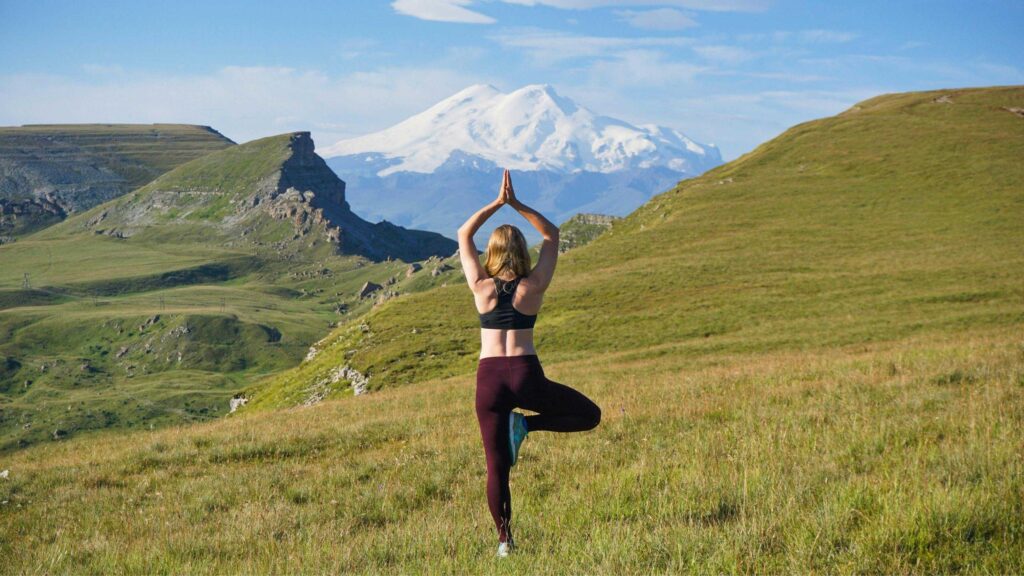
5. Tree Pose (Vrksasana)
Stand tall, place one foot on the inner thigh or calf of the opposite leg, and bring your palms together at your heart.
Why it helps: Balancing teaches patience and focus — a direct reflection of inner confidence.
6. Child’s Pose (Balasana)
Kneel down, sit back on your heels, and stretch your arms forward. Rest your forehead on the mat and take deep, calming breaths.
Why it helps: A gentle reminder that rest is part of progress. It releases mental and physical tension.
7. Savasana (Corpse Pose)
Lie flat on your back, close your eyes, and surrender. Let your breath flow naturally.
This moment of stillness is where true integration happens — where effort transforms into peace.

Building Confidence Through Consistency
Like anything meaningful, confidence in yoga grows through consistency. You might wobble in Tree Pose today — but next week, you’ll hold steady. That small progress is everything.
To help keep your motivation high:
- Set micro-goals – Focus on showing up for 10 minutes, not perfection.
- Celebrate your progress – Every stretch, every breath counts.
- Practice daily mindfulness – Even one conscious breath can shift your mindset.
- Join a community – Yoga is more joyful when shared.
The Mental Side of Confidence in Yoga
Confidence isn’t just physical — it’s emotional. When you learn to breathe through discomfort on the mat, you train your nervous system to handle life’s stress with grace.
Yoga teaches that self-doubt often lives in the mind, not the muscles. Through pranayama (breathwork) and mindful focus, you can quiet the noise and build inner strength.
As Yoga Journal notes, regular yoga practice enhances self-esteem by improving body–mind connection and reducing anxiety. (External source: Yoga Journal – Confidence Through Yoga).
Tips for Staying Motivated as a Beginner
It’s normal to feel overwhelmed at first, but remember: every yogi was once a beginner. Here are a few ways to stay inspired:
- Create a sacred space for your practice — even a small corner with candles or plants.
- Practice self-compassion. You don’t have to “nail” a pose; you just have to try.
- Mix in short meditations or journaling to deepen self-awareness.
- Watch your energy shift. Notice how your confidence builds off the mat, too.
Your Journey Begins Now
Confidence isn’t found in a pose — it’s built with each breath, each small victory. This simple beginner yoga flow for yoga principiantes is your invitation to reconnect with yourself, move with intention, and grow from within.
So unroll your mat, take that first deep inhale, and remind yourself: you’re already on the path to confidence.
Frequently Asked Questions
Q: How often should yoga principiantes practice this flow?
A: Aim for 3–4 times per week. Even short sessions help build muscle memory and mental calmness.
Q: What’s the best time of day for beginners to do yoga?
A: Morning practice boosts energy and focus; evening flows promote relaxation. Choose what fits your schedule best.
Q: I’m not flexible — can I still do yoga?
A: Absolutely. Yoga increases flexibility gradually. Every pose can be modified to meet you where you are.
Q: Do I need special equipment for beginner yoga?
A: A mat and comfortable clothes are enough. Blocks and straps can help with alignment, but they’re optional.
Q: How long until I notice results?
A: Most beginners feel more relaxed and confident within 2–3 weeks of consistent practice. Physical progress follows soon after.
Written by Harper Lee – Yoga Daily