Have you ever noticed how practicing yoga together can make you feel instantly closer to someone? Partner Yoga isn’t just about stretching your body—it’s about deepening connection, communication, and trust. Whether you’re doing yoga for two with a friend, a partner, or even a family member, you’ll discover new ways to move together, breathe together, and truly listen with your body.
In this guide, we’ll explore 10 beginner-friendly Partner Yoga poses that blend balance training, flexibility, and mindful bonding. You’ll learn how to support each other—physically and emotionally—while enjoying the joy of shared movement.
What Is Partner Yoga?
Partner Yoga combines traditional yoga postures with elements of trust and cooperation. Instead of practicing solo, two people work together to achieve balance and alignment in shared poses. It’s a dynamic experience that builds physical awareness, enhances communication, and strengthens emotional bonds.
It’s often described as a dance—one where breath replaces music, and presence replaces choreography. Whether you’re new to yoga or just curious, you don’t need to be an expert to enjoy it. All you need is an open heart and willingness to connect.
Benefits of Practicing Partner Yoga
Practicing Partner Yoga regularly can transform not only your body but also your relationships. Here’s how:
- Trust Building: Learning to lean on someone else—literally—teaches vulnerability and balance.
- Enhanced Flexibility: Supporting each other helps you move deeper into stretches safely.
- Improved Communication: Each pose requires clear cues, eye contact, and awareness.
- Mindful Bonding: You move together, breathe together, and share moments of stillness.
- Stress Relief: Physical touch and synchronized breathing activate the relaxation response.
It’s an act of co-creation that strengthens both body and connection.
10 Beginner Partner Yoga Poses
Below are 10 beginner-friendly poses to help you explore balance, flexibility, and connection through Partner Yoga. Practice on a non-slippery mat, maintain communication, and listen to each other’s limits.
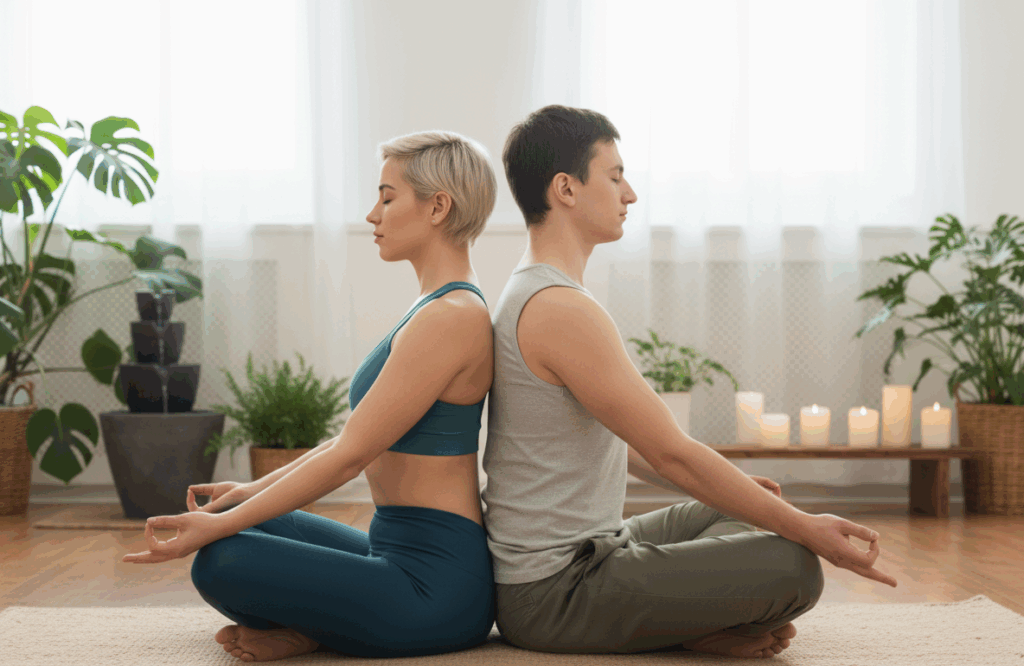
1. Seated Centering (Easy Pose Connection)
Sit cross-legged, back to back. Gently close your eyes and sync your breath. Feel your partner’s rhythm as your spines align. This simple start sets a calm foundation for mindful bonding.
Tip: Try five deep breaths in sync—one of the easiest ways to find balance.
2. Partner Forward Fold
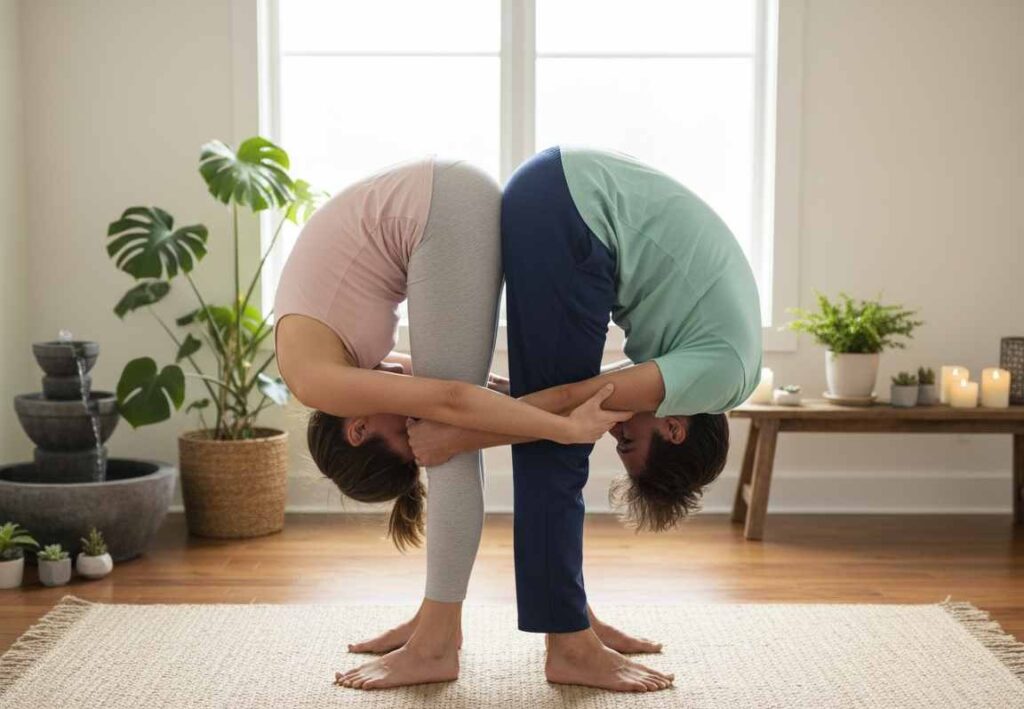
Sit facing each other, legs extended with soles touching. Hold each other’s wrists and alternate leaning forward. One person stretches while the other provides gentle resistance.
This pose builds trust and enhances hamstring flexibility while promoting mindful cooperation.
3. Double Downward Dog

Partner A gets into Downward Dog. Partner B places their hands a few feet in front, walking feet onto A’s lower back to form an inverted “V” on top.
A fun challenge that strengthens shoulders, builds balance, and creates a sense of playful connection.
4. Supported Boat Pose

Sit facing your partner with knees bent. Hold each other’s hands, press soles together, and lift your legs to form a diamond shape. Engage your core and laugh—it’s okay to wobble!
This posture strengthens abs, improves posture, and encourages communication.
5. Back-to-Back Chair Pose

Stand back to back, interlock elbows, and slowly squat down together, forming a “chair.” You’ll need trust and perfect coordination here!
This pose improves thigh strength and teaches balance through teamwork.
6. Double Tree Pose

Stand side by side, inside arms around each other’s waist. Place your outer foot on the inner thigh or calf. Balance as one—rooted yet connected.
It’s a symbol of growth and unity, perfect for cultivating trust.
7. Partner Warrior II

Face opposite directions, outer arms extended and inner arms linked. This stance radiates strength and shared purpose.
Feel the energy of your partner—two warriors grounded in harmony and mutual focus.
8. Supported Child’s Pose
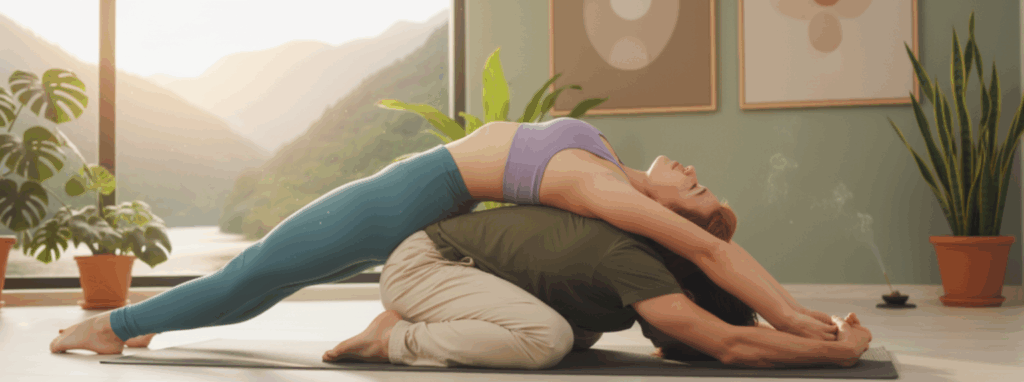
One partner kneels in Child’s Pose while the other gently presses down on their lower back, applying light pressure. Switch roles after a few breaths.
This posture offers grounding, trust, and a sense of care through touch.
9. Double Seated Twist

Sit back to back with legs crossed. Inhale and lift your spines tall. Exhale as you both twist gently to the right, placing your hand on your partner’s knee. Repeat to the left.
It’s an excellent detoxifying pose that strengthens the back and enhances flexibility.
10. Partner Savasana (Relaxation Pose)

Lie down side by side, palms lightly touching. Let your breath soften and feel the quiet connection that follows shared practice.
No words are needed—just presence.
Tips for a Safe and Enjoyable Practice
- Communicate constantly. Talk about what feels comfortable or not.
- Warm up properly. Stretch solo before starting your partner session.
- Maintain alignment. Use mirrors or feedback to prevent strain.
- Be patient. It’s about harmony, not perfection.
- Laugh together. Yoga for two is about joy and connection, not competition.
Deepening Your Connection Through Breath
In Partner Yoga, breath acts as your invisible bridge. Try inhaling and exhaling together for a few minutes before starting each pose. This simple ritual synchronizes your nervous systems, enhancing trust and calmness.
For more grounding practices, explore Aerial Yoga and balancing flows that extend your sense of connection and awareness.
Bringing Partner Yoga Into Everyday Life
You don’t need a yoga mat to stay connected. Practice mindfulness while walking, share moments of stillness, or exchange gratitude before sleep. Partner Yoga teaches us that harmony begins with awareness—and that balance on the mat reflects balance in life.
When we move together consciously, we remember that connection isn’t something we find—it’s something we create.
Related Reads
- Explore how to create a cozy practice space at home in How to Set Up a Small Yoga Studio at Home.
- External reference: Learn more about the emotional benefits of touch and co-regulation at https://www.health.harvard.edu.
Conclusion
Partner Yoga opens the door to connection, compassion, and playfulness. Each pose becomes an opportunity to build trust, strengthen balance, and communicate without words. Whether you’re deepening your relationship or simply sharing mindful movement with a friend, this practice brings warmth and laughter into your yoga journey.
So, roll out your mats, find a partner, and let your shared breath guide you. Connection starts here.
Frequently Asked Questions
Q: What should beginners know before trying Partner Yoga?
A: Start with simple poses that focus on communication and alignment. Always listen to each other’s comfort levels, and avoid pushing beyond your limits.
Q: Do I need to be flexible to practice Partner Yoga?
A: Not at all! Partner Yoga helps improve flexibility through mutual support. You’ll naturally stretch deeper as your partner stabilizes you.
Q: Can Partner Yoga improve relationships?
A: Yes, it can. The trust, eye contact, and shared breathing cultivate emotional closeness and reduce stress together.
Q: How often should I practice Partner Yoga?
A: Once or twice a week is great for beginners. Consistency helps build muscle memory and strengthens your physical and emotional bond.
Q: Is Partner Yoga only for couples?
A: No—friends, family members, or anyone open to connection can practice it. It’s about presence and teamwork, not romance.
Written by Harper Lee – Yoga Daily