
Few poses test your flexibility and patience like the splits. Whether you dream of sliding gracefully into Hanumanasana or simply want to improve your mobility, Split Yoga offers the perfect path. With the right techniques, stretching routine, and mindful consistency, you can achieve deep flexibility safely — and enjoy every step of the journey.
Why Split Yoga is More Than Just a Stretch
For many, the splits symbolize balance between strength and surrender. It’s not just about touching the floor — it’s about trusting your body’s rhythm. Split Yoga teaches you to release resistance, open tight hips, and cultivate patience. When practiced correctly, it enhances circulation, boosts muscle elasticity, and even quiets the mind.

Preparing Your Body for Split Yoga
Before you drop into deep flexibility training, proper preparation is essential. Think of your muscles like clay — cold clay cracks, warm clay bends.
1. Warm Up with Gentle Movements
Start with dynamic stretches that increase blood flow:
- Cat-Cow (Marjaryasana–Bitilasana) to mobilize the spine.
- Downward-Facing Dog (Adho Mukha Svanasana) to lengthen the hamstrings.
- Low Lunge (Anjaneyasana) to open the hips.
Spend 5–10 minutes here before moving into deeper postures.
2. Activate Supporting Muscles
Split Yoga isn’t just about flexibility — it’s also about stability. Engage your core, glutes, and thighs to protect the joints. Core activation not only prevents injury but helps you stay balanced and centered.
Essential Yoga Poses for Mastering the Splits
The secret to the perfect split lies in patience and progressive stretching. Below are foundational poses to add to your flexibility training.
1. Lizard Pose (Utthan Pristhasana)
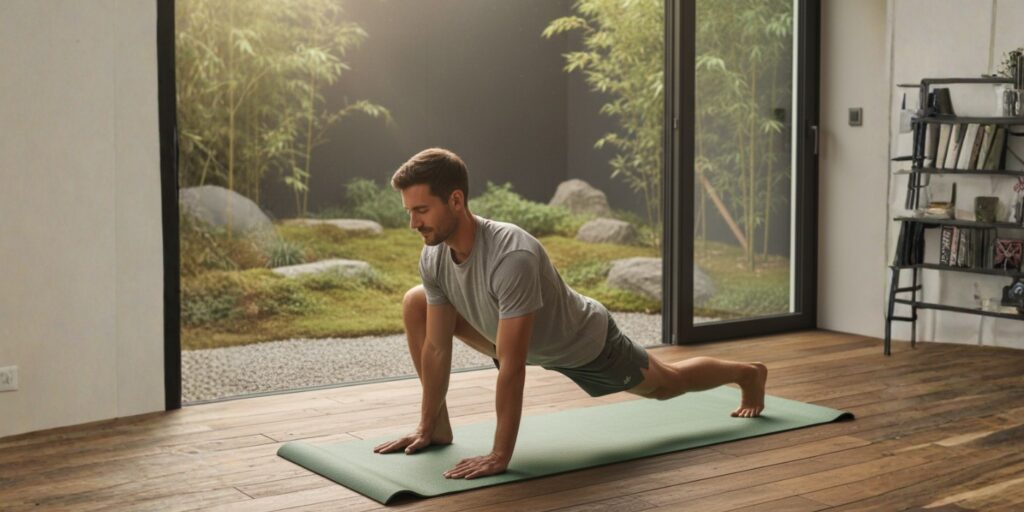
Targets: Hip flexors and inner thighs.
Sink the hips slowly, keeping your back leg extended. Breathe deeply to release tension.
2. Half Split (Ardha Hanumanasana)

Targets: Hamstrings and calves.
Straighten the front leg while keeping your hips square — this strengthens alignment for the full split.
3. Pigeon Pose (Eka Pada Rajakapotasana)

Targets: Deep hip openers.
Let gravity guide your hips down. Stay mindful of alignment to prevent strain on the knees.
4. Full Split (Hanumanasana)

The crown jewel of Split Yoga! Slide your front heel forward and back leg backward. Keep your hips squared and chest lifted. Even if you’re a few inches off the ground, celebrate progress — consistency will take you the rest of the way.
A Step-by-Step Split Yoga Progression Plan
Consistency matters more than intensity. Follow this simple 7-day Split Yoga routine to gradually improve your flexibility:
- Day 1–2: Gentle warm-ups and 15 minutes of hip openers.
- Day 3–4: Add half splits and low lunges, holding each pose for 30 seconds.
- Day 5–6: Incorporate full split attempts with props like yoga blocks.
- Day 7: Rest and reflect — flexibility grows during recovery.
Repeat weekly, increasing your hold times and depth as your body adapts.
Breathing and Mindfulness in Split Yoga
Ever noticed how tension disappears when you exhale deeply? That’s the power of breathwork. In Split Yoga, breath leads the body. When a stretch feels challenging, slow your breathing and invite relaxation.
Try this simple pattern:
- Inhale through your nose for 4 seconds.
- Hold for 2 seconds.
- Exhale slowly for 6 seconds.
This mindful breathing promotes calm focus and helps your muscles release resistance.
Common Mistakes to Avoid in Split Yoga
Even seasoned practitioners can fall into bad habits. Avoid these pitfalls:
- Skipping warm-ups: Cold muscles are more prone to tears.
- Forcing flexibility: Never push into pain; respect your body’s limits.
- Uneven hips: Always square your pelvis to maintain alignment.
- Neglecting strength training: Balanced muscles improve stability and longevity.
Mental Benefits of Split Yoga
Mastering the splits isn’t just about flexibility — it’s about mindset. The process teaches you patience, resilience, and trust. Each small gain becomes a lesson in surrender, reminding you that yoga is a journey, not a competition.
As you hold a stretch and breathe through discomfort, you’re training both your body and your mind to stay calm under challenge — a skill that extends far beyond the mat.
Pro Tips for Faster Split Progress
If you’re committed to achieving your Split Yoga goals, remember these keys:
- Stay consistent: Even 15 minutes daily can transform your flexibility.
- Use props wisely: Blocks, straps, and cushions prevent injury.
- Hydrate and recover: Muscles stretch better when nourished and rested.
- Celebrate small wins: Every inch of progress matters.
Suggested Resources
For more advanced tutorials, check out:
- How to Improve Flexibility with Yin Yoga
- External resource: Healthline – How to Do the Splits Safely
You can also explore more aerial and acro yoga sequences at Yoga Daily’s Aerial, Acro & Power Yoga category.
Conclusion
Achieving the perfect split through Split Yoga is less about forcing your body and more about honoring it. With consistency, mindful breathing, and proper technique, you’ll not only improve your flexibility but deepen your relationship with yourself.
So, unroll your mat, breathe deeply, and trust the process — every stretch brings you closer to grace and inner balance.
Frequently Asked Questions
Q: How long does it take to achieve the full split with yoga?
A: It depends on your starting flexibility. With consistent practice, many people notice major progress within 4–8 weeks of Split Yoga training.
Q: Can beginners safely practice Split Yoga?
A: Absolutely! Start with modified poses like Half Split and Lizard Pose. Always warm up first and avoid forcing your range of motion.
Q: What’s the best time of day to practice Split Yoga?
A: Late afternoon or evening is ideal since your muscles are naturally warmer, but any time works if you include a proper warm-up.
Q: Should I do Split Yoga every day?
A: You can, as long as you listen to your body. Alternate between active stretch days and gentle recovery sessions to avoid overstraining.
Q: Does Split Yoga help with other yoga poses?
A: Yes! Improving your hip and hamstring flexibility enhances postures like Warrior II, Pigeon, and even Wheel Pose.
Written by Sofia Patel – Yoga Daily