Have you ever seen an aerial yogi floating effortlessly midair and thought, “How can something be that strong and that graceful at once?” That’s the magic of the Aerial Yoga Aesthetic—a visual symphony of balance, lightness, and mindful movement. This article will guide you through the beauty of capturing that art on camera—whether you’re a yogi, photographer, or simply a lover of all things graceful. You’ll learn how to blend yoga philosophy with the creative eye of photography to tell a story of harmony and strength.
The Soul of the Aerial Yoga Aesthetic
Aerial yoga isn’t just about physical postures—it’s a meditation in motion. Suspended in soft silks, practitioners experience freedom, surrender, and a new perspective of the body in space. The Aerial Yoga Aesthetic captures this ethereal feeling. Every shot becomes a dance between body, breath, and gravity.

The silks symbolize both support and challenge. They hold you up, but also demand trust. When photographed with care, that duality becomes the essence of the image—the surrender and the strength, the stillness and the movement.
Why Aerial Yoga Photography Is So Captivating
Have you noticed how aerial yoga photos almost look like living sculptures? That’s because they combine three visually powerful elements:
- Suspension: The feeling of flight creates natural intrigue.
- Symmetry and Lines: Poses like Inverted Butterfly or Star Pose form clean, elegant geometry.
- Emotion: Aerial yoga captures both focus and serenity—a reflection of mindfulness in motion.
The result? An art form that mirrors life’s balance: effort and ease, control and flow.
Mindfulness Behind the Lens
Beautiful aerial photography starts long before the shutter clicks. It begins with presence. When you’re fully aware of your breath, surroundings, and energy, your photos reflect that mindfulness.
Try this before each session:
- Take three deep breaths with your subject (or yourself, if you’re both model and photographer).
- Observe how the fabric moves with breath.
- Capture moments between transitions—the subtle exhale, the floating pause, the moment right before release.
That’s where the true Aerial Yoga Aesthetic lives—in the quiet balance of body and awareness.
The Role of Light in Aerial Yoga Aesthetic
Lighting is the silent storyteller. It defines emotion, texture, and focus.
Best Lighting Tips:
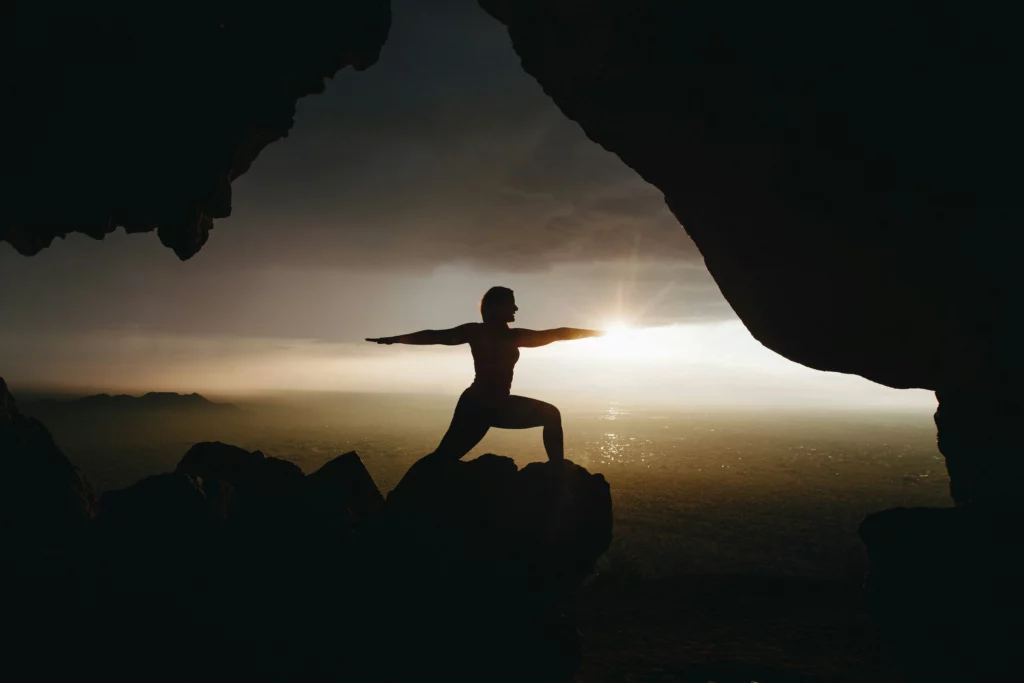
- Natural Light: Shoot near sunrise or sunset for golden tones that enhance softness and serenity.
- Backlighting: Position the subject between the light source and the camera to emphasize the silks’ transparency.
- Studio Glow: If shooting indoors, use softbox lighting angled from above to mimic natural daylight.
Light isn’t just a tool—it’s the energy that turns yoga into visual poetry.
Choosing the Perfect Poses for the Camera
Certain poses photograph better because they combine strength, line, and grace. Here are five classic aerial yoga postures that define the aesthetic:
- Inverted Star Pose – Expansive and dramatic, perfect for wide-angle shots.
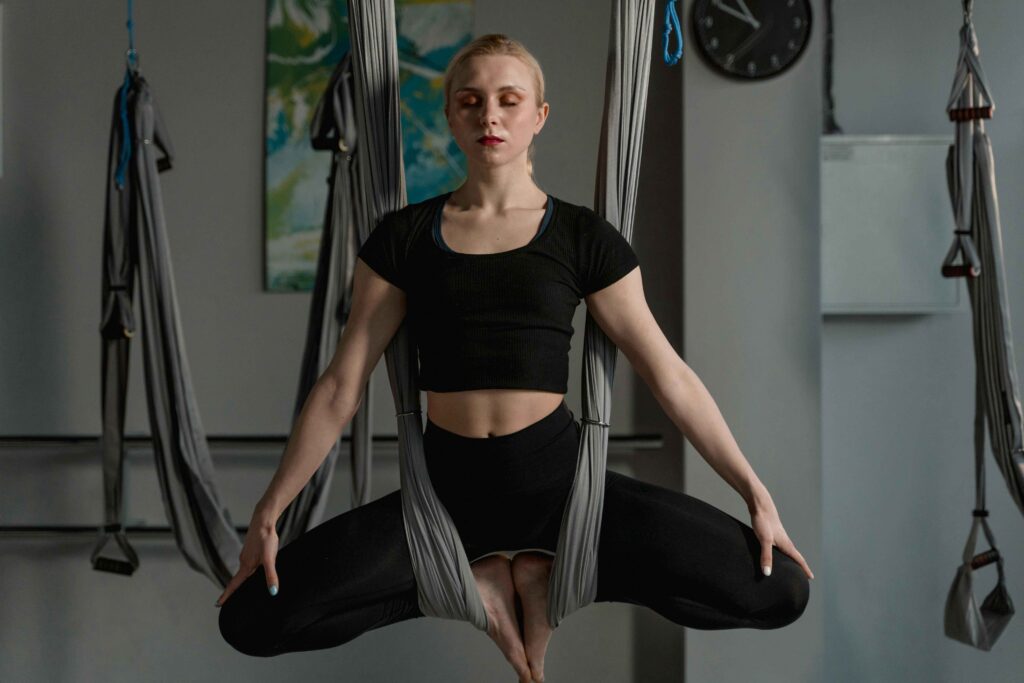
- Flying Lotus – A serene midair meditation that embodies inner peace.
- Open Bow Pose – Expresses heart opening and vulnerability.
- Aerial Plank – Showcases alignment and core strength.
- Goddess Pose in the Air – A balance of divine femininity and grounded power.
How to Build a Mindful Aerial Yoga Photo Session
Step 1: Create the Atmosphere
Play gentle ambient or instrumental music. Choose a calm, uncluttered background—neutral tones let the silks and poses shine.
Step 2: Align with Intention
Decide what emotion or story you want to portray: empowerment, stillness, joy, release? Every movement should reflect that theme.
Step 3: Guide the Flow
Instead of posing rigidly, flow between positions. Encourage slow transitions so the camera can capture authentic movement rather than static form.
The Emotional Layer: Photography as Meditation
Shooting aerial yoga can become its own meditative practice. Whether you’re behind or in front of the lens, you’ll notice how the focus required mirrors yoga itself. You breathe, align, and act from stillness. It’s as if the camera becomes an extension of awareness.
This synergy between mindfulness and creativity connects to principles often used in gentle yoga and emotional regulation—you find balance not by forcing, but by flowing.
When you photograph from that place, the results carry emotional resonance that goes beyond aesthetics.
From Strength to Serenity: The Dual Nature of Aerial Imagery
Aerial yoga photography celebrates duality—the strength of inversion and the surrender of suspension. Much like in mindfulness for kids or breathing exercises, balance is cultivated between doing and being.
The silks remind you that life is about trust. You can’t soar without letting go.

Quick Tips to Elevate Your Aerial Yoga Photography
- Use Movement: Let the subject sway lightly for dynamic shots.
- Focus on Details: Zoom in on hand grips, silk textures, or expressions.
- Color Harmony: Coordinate outfit and silk colors to evoke emotion (white for peace, red for vitality, blue for calm).
- Breathe Together: Capture rhythm—breath makes the pose come alive.
- Edit Mindfully: Keep retouching subtle; authenticity beats perfection every time.
Integrating Holistic Awareness into Every Frame
True Aerial Yoga Aesthetic photography merges artistry with self-awareness. Each image becomes a story of surrender, resilience, and lightness of being. When practiced with mindfulness, both photographer and subject enter a flow state—an unspoken dialogue between body and breath.
If you’re inspired to dive deeper into other styles of movement and balance, explore Aerial, Acro & Power Yoga for more guides and inspiration.
For complementary practice ideas, you might also enjoy:
And to understand how movement connects to mental wellness, see this helpful overview from Harvard Health.
Capturing Stillness in Flight
The Aerial Yoga Aesthetic is more than a look—it’s a feeling. It’s about the serenity that comes from being suspended between earth and sky, supported yet free. When you approach aerial yoga photography with awareness, every image becomes a meditation—a reminder that grace isn’t about perfection, but presence.
So next time you’re behind the camera or wrapped in silk, take a deep breath. Let the light find you. And let your body tell its story.
Frequently Asked Questions
Q: What camera settings are best for capturing aerial yoga photography?
A: Use a fast shutter speed (1/500 or faster) to freeze motion, and a wide aperture (f/2.8–f/4) for dreamy background blur. Natural light often produces the best results.
Q: Do I need a professional camera to capture Aerial Yoga Aesthetic photos?
A: Not necessarily. Many smartphones with portrait modes and good lighting can create stunning shots if you focus on composition and emotion.
Q: How can I make my aerial yoga photos look more mindful?
A: Incorporate breath awareness and slow transitions. Capture pauses, not just poses—the moments between movements often hold the most emotion.
Q: What’s the safest way to photograph aerial yoga for beginners?
A: Always work with a certified aerial instructor and ensure silks are properly rigged. Avoid extreme inversions without supervision.
Q: How do I choose the best background for aerial yoga photos?
A: Go for minimalist or nature-inspired settings that emphasize flow and grace. Neutral tones and soft textures highlight the subject’s movement and serenity.
Written by Sofia Patel – Yoga Daily